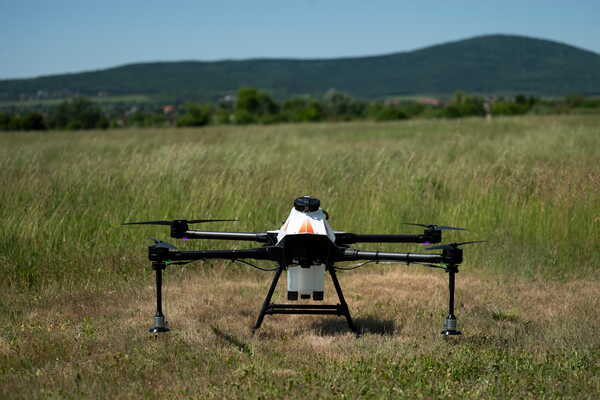
ADLC cleared for night cargo-drone ops at Port of Antwerp
Belgian operator ADLC won approval for night cargo-drone flights in the Port of Antwerp area, a regulatory step toward credible 24/7 industrial drone logistics in Europe.


Key facts
- Belgian operator ADLC received permission to fly cargo drones at night as well as during the day
- ADLC operates in the Port of Antwerp area and positions the move as enabling 24/7 industrial drone deliveries
- The source provides no details on approving authority, aircraft type, operating category, or safety mitigations
3 minute read
Belgian drone operator ADLC, active in the Port of Antwerp area, has been granted permission to operate cargo drones at night as well as during daytime, a step the company frames as part of the professionalisation of drone delivery and as an enabler for continuous, 24/7 industrial logistics by UAS. In practical terms, night approval is often the difference between a pilot service and an operationally credible logistics capability for ports and industrial estates, where demand is driven by shift work, time-critical parts movement, and constrained access across secure perimeters.
For European stakeholders, the significance is less about the specific operator—given the source provides no detail on airframe, payload, command-and-control architecture, detect-and-avoid provisions, or whether flights are BVLOS—and more about the regulatory precedent around critical infrastructure environments. Ports combine dense ground activity, cranes and obstacles, controlled zones, and often mixed airspace considerations; extending drone logistics into darkness typically requires demonstrable mitigations for conspicuity, navigation, obstacle clearance, human factors, and emergency procedures. Even a geographically bounded authorisation can therefore signal increased regulator confidence in industrial UAS safety cases and oversight models.
The implication for Europe’s wider drone logistics market is a modest but real step toward “always-on” service concepts that align with resilience and efficiency goals in major supply-chain nodes. European port authorities, logistics integrators, and defence-adjacent infrastructure operators monitoring dual-use UAS developments should treat night-operation approvals as an early indicator of which local ecosystems—operator maturity, competent authority practice, and industrial demand—are converging fastest toward scalable operations. However, the source lacks the technical and regulatory specifics needed to assess replicability, risk posture, or timelines for expansion beyond the Antwerp area.
Source: DroneWatch.eu