AI Drones Developed by Ukrainian and European Firms to Combat Russian Bombs
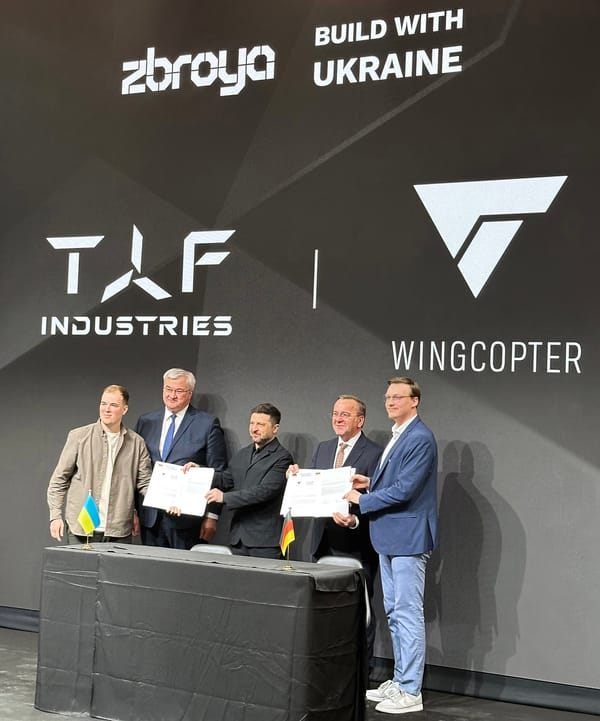
Ukrainian and European companies are collaborating to test AI-driven drones aimed at intercepting Russian KAB bombs. These advanced drones leverage artificial intelligence to enhance their capabilities in identifying and neutralizing aerial threats.


Key facts
- Ukrainian and European firms are testing AI drones for military applications.
- The drones are designed to intercept Russian KAB bombs.
- This initiative showcases the integration of AI in modern warfare.
- The project aims to enhance aerial defense capabilities.
- Collaboration emphasizes the importance of technology in conflict.
Summary
Ukraine and European partners are moving to counter Russia's KAB glide bomb threat with AI-enabled interceptors, seeking a cheaper, scalable layer between classic ground-based air defence and high-end fighters. The logic is straightforward, large surface-to-air missiles are ill suited to swatting relatively inexpensive munitions, and front-line units need mobile point defence that can sense, decide and strike within seconds. If proven, AI drones could shift the cost curve and complicate Russian strike planning along the front and deep rear.
Success will depend on integration, not gadgetry. These drones must plug into existing command networks, receive cues from radars and electro optical sensors, and deconflict with friendly aircraft and counter UAS teams. NATO standardisation on data links, identification measures and rules for autonomy will be critical for coalition use. Electronic warfare resilience, assured navigation and spectrum discipline will determine whether the systems survive in a dense jamming environment.
Industrial and policy choices matter. European capitals are experimenting with faster procurement routes, but fielding in numbers will require multi year funding, common requirements and streamlined certification. Initiatives such as NATO's DIANA ecosystem and EU defence industrial instruments can accelerate testing, but governments must also address export controls, cybersecurity and AI assurance. Warfighter in the loop governance and clear performance metrics should guide rapid iteration without trading safety for speed.
For Europe, partnering with Ukrainian firms offers real world feedback and strengthens a defence base that must deliver attritable systems at scale. If AI interceptors mature, they could be layered across NATO's eastern flank to protect logistics hubs, airfields and critical infrastructure, freeing high end assets for other tasks. The broader lesson is that air defence is becoming more distributed, software driven and attrition tolerant.
Europe's next competitive edge will come from integrating AI, EW and cheap autonomy into coherent, layered defence.