Alpine Eagle expands Sentinel production to 100 staff as European counter-UAS demand accelerates
Munich-based Alpine Eagle will grow to 100 employees in 2026 and open a 2,000 sqm interceptor facility as European governments contract for scalable drone defence systems.


Key Facts
- Alpine Eagle expanded from 12 employees (2024) to 50 (2026), targeting 100 by year-end to support Sentinel counter-UAS production scaling
- Bundeswehr was launch customer in 2024; company now holds contracts with three additional European customers plus UK and Netherlands programmes
- Alpine Eagle partners with Dutch manufacturer DeltaQuad for UAV platform supply and plans to open 2,000 sqm interceptor production facility near Munich
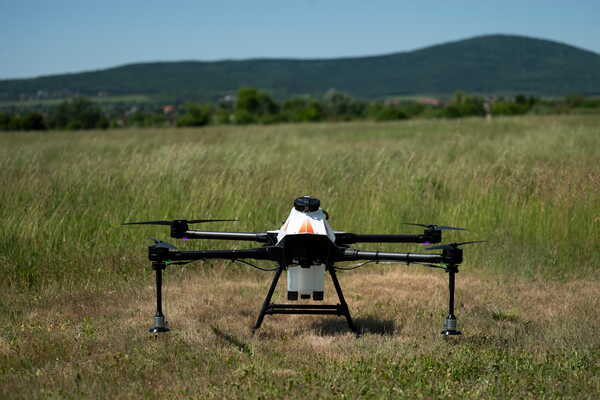
Alpine Eagle announced on 19 March that it is scaling production of its Sentinel counter-drone system in response to accelerating European demand. The company has grown from 12 employees in 2024 to 50 in 2026 and plans to reach 100 staff this year. The German Bundeswehr served as launch customer in 2024. Since then, Alpine Eagle has secured contracts with three additional European customers and expanded into the UK and Netherlands. Sentinel combines airborne radar, a sensor network, and software-defined defence architecture to detect and track drones across wide areas, neutralising them with onboard airborne interceptors. The company has conducted counter-drone trials in Ukraine and participated in Project Vanaheim, a US-UK counter-UAS evaluation.
The expansion reflects growing European recognition that drone warfare—demonstrated in Ukraine and the Middle East—requires scalable, lower-cost defence systems. Analysts estimate that defenders spent over $1.5 billion intercepting drones in recent Middle East attacks that may have cost attackers around $250 million to launch. This cost asymmetry is driving demand for systems designed to counter high volumes of low-cost threats. Alpine Eagle addresses this by integrating its proprietary sensing and defence software with the DeltaQuad Evo, a UAV platform produced by Dutch manufacturer DeltaQuad. This partnership provides access to industrial-scale production capacity while strengthening a resilient European supply chain. The company is also planning to open a 2,000-square-metre production facility for its own-developed interceptor near Munich.
Alpine Eagle's forward trajectory depends on whether European defence procurement can match the urgency reflected in its hiring and facility planning. The company has tested Sentinel in Ukraine, where counter-drone systems face mass drone attacks and must function under disrupted GPS conditions. However, the path from trials to sustained multi-year contracts remains uncertain. European defence budgets are under political pressure, and procurement timelines often lag operational need. If Alpine Eagle's customer base expands as projected, it will signal that European governments are willing to prioritise rapid fielding of scalable counter-UAS systems over traditional acquisition cycles.
The Sentinel model also faces a structural question: can software-defined, commercially integrated defence platforms earn the same confidence as legacy systems built to military specifications? Alpine Eagle's approach—integrating COTS UAV hardware with proprietary defence software—offers speed and cost advantages. But European militaries have historically favoured vertically integrated, defence-qualified systems. If Alpine Eagle secures sustained contracts and operational acceptance, it could validate a new model for European defence technology companies: rapid scaling through hybrid commercial-military supply chains rather than traditional prime contractor pathways.
Source: European Security & Defence