
Anduril’s ‘Thunder’ tiltrotor targets Army helicopter teaming
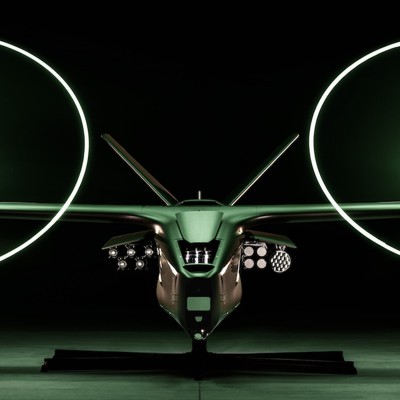
Anduril unveiled “Thunder”, an autonomous hybrid-electric armed tiltrotor pitched as a low-cost wingman to team with Army helicopters, with export intent signalled at Farnborough.

Key facts
- Anduril unveiled “Thunder”, an autonomous hybrid-electric VTOL tiltrotor intended to team with US Army helicopters such as the Apache.
- Thunder is designed to be container-transportable and roughly “Group 5-sized”, with first flight envisioned next year.
- Anduril claims flexible armament capacity including up to 10 Hellfire-class missiles, 76 70mm rockets, or 16 launched effects, plus 12 counter-UAS effectors.
3 minute read
Anduril is extending its “drone wingman” narrative beyond the US Air Force into the US Army’s rotorcraft mission set with “Thunder”, an autonomous, heavily armed, hybrid-electric VTOL tiltrotor designed to accompany crewed helicopters such as the AH-64 Apache. The company’s core proposition is magazine-depth and risk redistribution: three uncrewed aircraft per crewed helicopter would, in Anduril’s framing, triple available munitions while reducing aircrew exposure, and at a cost point low enough to tolerate combat losses. This aligns with the wider US push toward attritable systems and crewed-uncrewed teaming, but Anduril is positioning Thunder as a commercialisable product intended for efficient production rather than a bespoke development path.
Thunder is being developed with Archer Aviation and is described as roughly “Group 5-sized”, with a stated design requirement to fit into a standard shipping container for transport and deployment flexibility. Anduril’s published loadout claims are ambitious: up to ten air-to-ground missiles (including Hellfire-class), 16 “launched effects”, or 76 70mm rockets, plus 12 counter-UAS effectors in the nose. Company officials state work has been ongoing for two to three years, with first flight envisioned next year and a notional build/production trajectory toward the end of the decade and into the early 2030s.
For Europe, the salient signal is not just the concept but the venue and language: unveiling at Farnborough and explicitly naming the UK and “many European partners” indicates Anduril is seeking to shape allied requirements early, potentially around helicopter escort, stand-in strike, and counter-UAS roles that could complement European attack helicopter fleets and future rotary-wing programmes. This creates a near-term procurement and industrial-policy dilemma for European ministries: whether to treat US-origin autonomous wingmen as an urgent capability insertion for deterrence and magazine depth, or as a competitive pressure to accelerate indigenous uncrewed rotorcraft/tiltrotor teaming efforts and associated autonomy, weapons integration, and safety certification frameworks. The comparison point is widening: Boeing has already briefed a similar unmanned tiltrotor wingman concept using lessons from MQ-28 Ghost Bat, underscoring that the “armed autonomous escort for helicopters” space is becoming contested, with implications for European interoperability standards, export controls, and the maturity of weapons-release authorities for autonomous systems.
Source: Defense One


