Assessing the Feasibility of a Drone Wall Against Russia
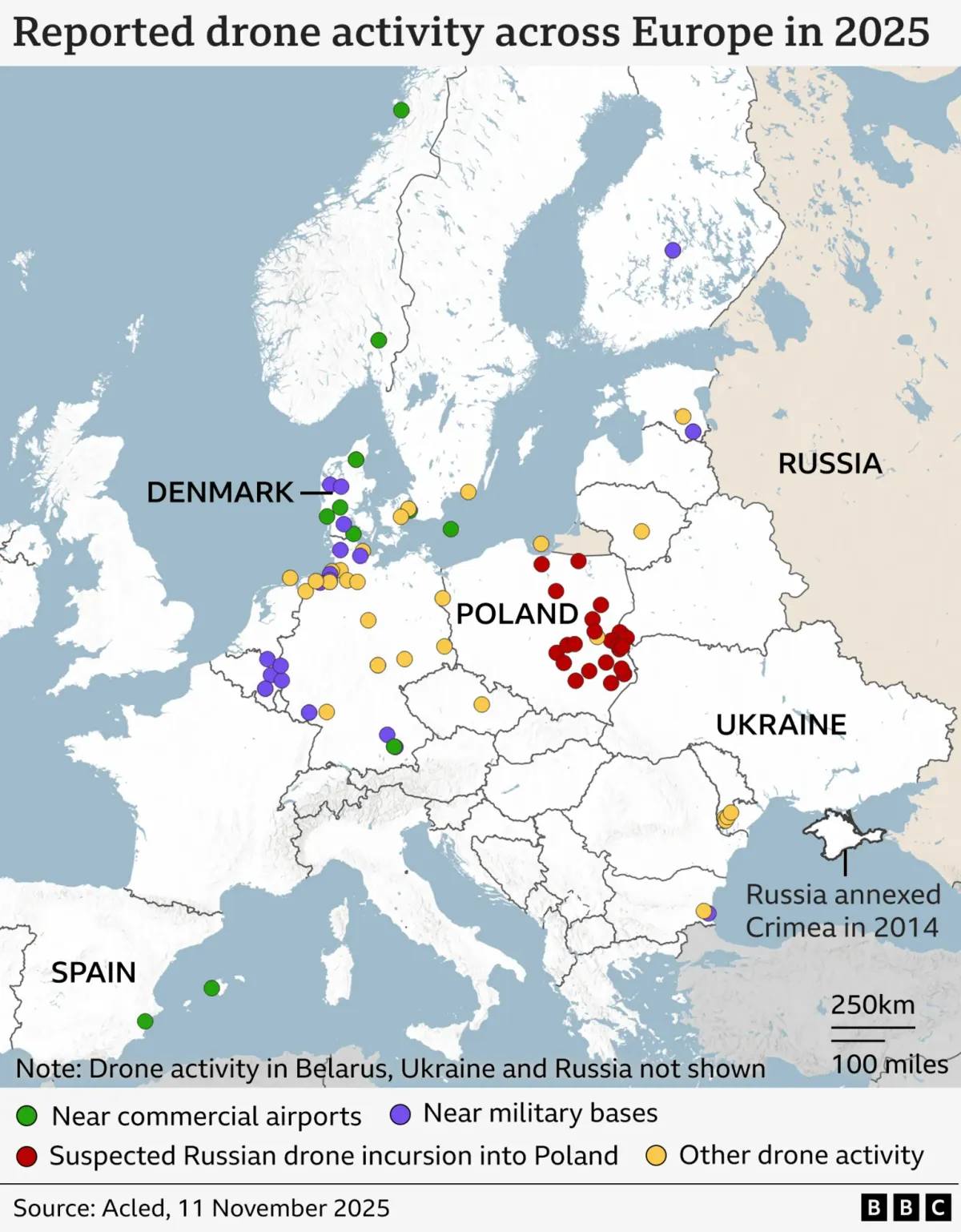
The concept of a 'drone wall' to counter Russian aerial threats has emerged, raising questions about its practicality and effectiveness. This initiative aims to enhance European defense capabilities against drone incursions, particularly in Eastern Europe.

Key facts
- The 'drone wall' aims to create a robust defense against Russian drone threats.
- Technological integration and logistical challenges pose significant hurdles.
- Strategic coordination among European nations is essential for success.
2 minute read
The proposed drone wall is a federated, layered counter UAS architecture, not a monolithic fence. Its value would come from common sensing, shared tracks and rapid engagement authority across borders. That means integrating national C2 with NATO Integrated Air and Missile Defence, adopting open standards for data, and enforcing cyber hygiene from the outset.
Governance is the hard part. Who owns the picture, who pays for attrition, who authorises electronic attack near civilian airspace. The EU can convene financing and industrial policy, NATO can set tactics and interoperability, capitals must align procurement and sustainment. Without common certification and spectrum policy, jammers and sensors will conflict with aviation and critical infrastructure.
The cost curve also matters. Russia is fielding cheap, numerous drones and potent electronic warfare. Europe must privilege low cost soft kill effects, smart jamming, take down teams, and attritable interceptors, reserving expensive missiles for high priority targets. Systems need mobility, deception and redundancy to ride out GPS spoofing, cyber intrusion and kinetic strikes. Civil air traffic integration via EUROCONTROL and national regulators is essential to avoid airspace paralysis.
A phased approach is the only credible path. Pilot segments in the Baltics and along key energy corridors, spiral upgrades informed by Ukraine, rigorous metrics for detection probability, latency and false alarms, and joint exercises to validate rules of engagement. Industrial policy should mandate open architectures and common interfaces to avoid vendor lock in and ensure rapid replenishment. Done this way, the drone wall becomes a template for frontier air defence, not a slogan. Europe is shifting toward software defined, networked defence.