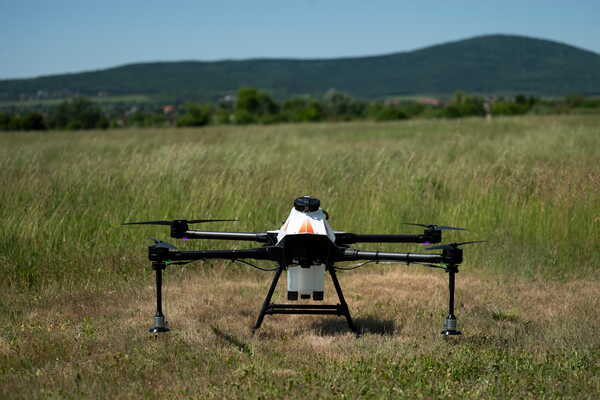
Autonomous system detects and suppresses wildfires within 12 minutes
Dryad Networks demonstrated a system where solar-powered gas sensors detected smouldering combustion in three minutes and autonomous drones extinguished the fire within twelve minutes.


German startup Dryad Networks has demonstrated an autonomous wildfire detection-to-suppression chain that detected smouldering combustion in three minutes and extinguished the blaze within twelve minutes.
Key facts
- Silvanet gas sensors detected smouldering combustion within 3 minutes of ignition during Dryad’s demo.
- An observation drone autonomously localised the fire and a Silvaguard suppression drone extinguished it within 12 minutes.
- System uses solar-powered hangars, edge/cloud software and custom airframes; Dryad is an XPRIZE Wildfire semi-finalist.
2 minute read
A German demonstration showcased a fully integrated detection and suppression system built for ultra-early intervention in wildfires. Silvanet, a dispersed network of solar-powered gas sensors, is tuned to detect gases emitted during the smouldering phase of combustion and triggered an automatic response within three minutes of ignition. An observation drone launched autonomously from a solar hangar, used optical and infrared imaging and onboard/cloud processing to locate the hotspot, and then a dedicated Silvaguard suppression drone deployed and extinguished the fire within twelve minutes. The observation platform is based on Ascent Aerosystems’ NX30 coaxial design; the suppression airframe was developed through Germany’s PEELIKAN project and supplied by Harald Müller Metall-Sonderfertigung GmbH. Dryad developed the linking electronics, sensors and software to create an automated chain requiring minimal human intervention.
Presented to XPRIZE Wildfire judges, the trial positions Dryad among semi-finalists competing to detect and neutralise wildfires within ten minutes of ignition. The demonstration also highlights wider European considerations: how to certify and integrate autonomous suppression systems into civil protection, manage low-altitude airspace for fully automated operations, ensure reliable performance across vegetation types and seasons, and sustain remote infrastructure. Parallel research in the Netherlands on shockwave-generating firefighting drones underlines that multiple technical approaches are emerging. For policymakers and emergency planners, the immediate questions are operational validation, regulatory clarity for autonomous payload deployment, and the logistics of scaling permanent, sensor-driven nodes across high-risk landscapes.
Source: DroneWatch