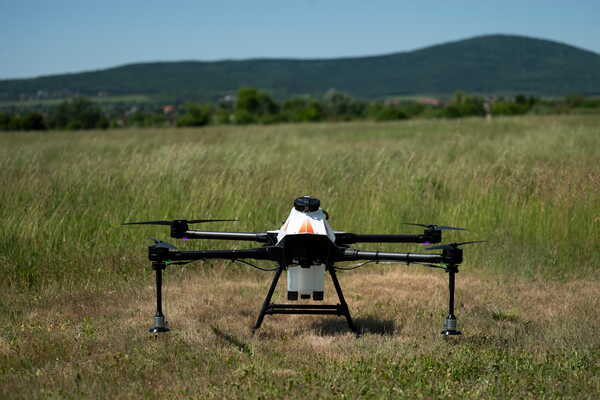
Baykar unveils K2 Kamikaze drone with AI, swarming capabilities
Baykar K2 swarm tests signal a new era of low cost AI driven saturation warfare threatening to displace European defense primes in the loitering munition market

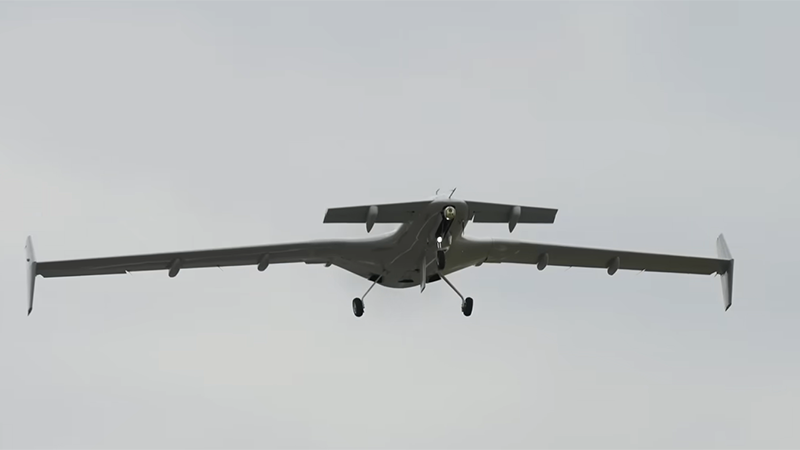
Key Intelligence
- Baykar successfully tested K2 kamikaze UAVs in a 5-ship autonomous swarm configuration.
- The K2 utilizes AI algorithms for multi-sortie formation flight and saturation strike capability.
- Strategic integration with Leonardo and Piaggio Aerospace facilitates K2's entry into the EU market.
3 minute read
The successful flight testing of Baykar’s K2 Kamikaze UAV over the Gulf of Saros signals a pivot in Turkish aerospace strategy from Medium-Altitude Long-Endurance (MALE) dominance toward the high-demand loitering munition sector. By demonstrating five-aircraft formation autonomy, Baykar is addressing a long-standing critique regarding its lack of micro-miniature strike platforms. For European defense officials, the K2 represents the democratization of saturation strike capabilities; it provides a 'system-of-systems' approach that allows smaller nations to achieve cruise-missile-level effects against sophisticated air defenses and logistics nodes without the prohibitive costs of traditional precision-guided stand-off weapons.
Europe’s strategic landscape is particularly vulnerable to this shift. While the continent has focused on high-complexity, high-cost platforms like the nEUROn or FCAS-linked remote carriers, Turkey is delivering field-ready, attritable solutions that have already been battle-hardened in Ukraine and the Middle East. The K2 enters a market currently dominated by the Iranian Shahed-136 and the U.S. LUCAS, yet it carries the pedigree of the TB2’s operational success. The implication for EU procurement is clear: the K2, backed by Baykar’s 2025 acquisition of Piaggio Aerospace and its industrial partnership with Leonardo, is positioned to become a de facto standard for European 'deterrence on a budget' if domestic alternatives do not reach scale rapidly.
Furthermore, the collaboration with Leonardo—integrating Italian sensor payloads with Turkish airframes—bypasses traditional ITAR-related hurdles and streamlines the K2’s path into NATO inventories. This vertical integration, combined with the K2’s ability to target armor concentrations and naval assets via autonomous swarming, creates a competitive pressure on European defense primes. As the conflict in Ukraine continues to emphasize the necessity of mass over exquisite technology, the K2’s entrance into the market suggests that the future of European border defense may rely less on a few sophisticated jets and more on the swarm-based, AI-managed attrition that Baykar is now actively exporting.
Source: Breaking Defense