Belgium Acquires Latvian Drone-On-Drone Technology
Belgium has announced the acquisition of advanced drone-on-drone technology developed in Latvia. This strategic purchase aims to enhance Belgium's defense capabilities in the evolving landscape of unmanned aerial systems (UAS).

Key facts
- Belgium's acquisition focuses on enhancing drone combat capabilities.
- The technology is developed by Latvian defense firms.
- This move is part of Belgium's broader defense modernization strategy.
2 minute read
The appearance of unidentified drones over Kleine Brogel airbase earlier this month, home to American nuclear warheads and Belgium's F-16 fleet, exposed a glaring gap in the country's defences. That the Belgian authorities were forced to rely on German and British assistance to monitor their own airspace proved operationally unsustainable. In response, Brussels has rapidly allocated €50m ($58m) to close the deficit, turning not to the established western European defence giants, but to a startup in Riga.
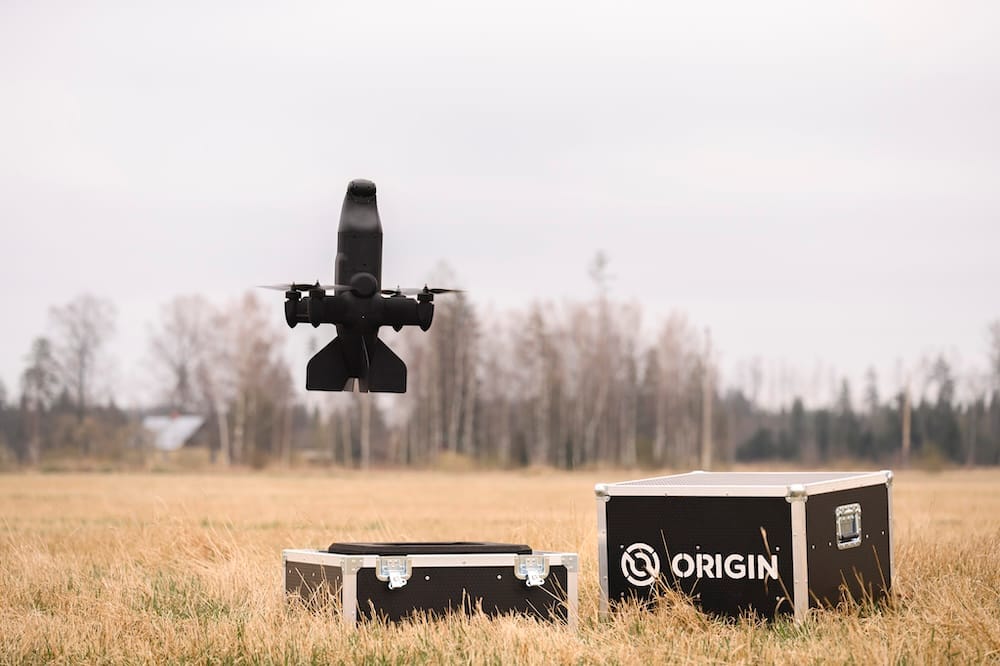
The procurement of "Blaze" interceptors from Latvia’s Origin Robotics reflects a pragmatic shift in European procurement. Rather than relying solely on electronic warfare or expensive surface-to-air missiles, Belgium is opting for a "drone-on-drone" kinetic solution. The system uses AI-aided computer vision to track fast-moving targets and neutralises them via airburst fragmentation, destroying the hostile vehicle with shrapnel without requiring a direct hit. This addresses the critical "cost-exchange" ratio exposed by the war in Ukraine: the need to defeat cheap, expendable drones with equally affordable interceptors, rather than exhausting stockpiles of high-value munitions.
Sourcing from the Baltics serves a dual purpose. It strengthens the intra-European supply chain and leverages the rapid innovation cycle seen in frontline states. The speed of the acquisition is notable; Belgian Defence Minister Theo Francken indicated that capabilities could be strengthened within weeks, a timeline that bypasses traditional multi-year procurement cycles. For the EU, this supports the broader goal of a sovereign defence industrial base, reducing dependence on external vendors for critical, lower-tier air defence assets.
Operational value will now hinge on integration. To be effective, these interceptors must be networked into NATO’s wider integrated air and missile defence architecture. Success depends on the ability to fuse sensor data, classify threats, and execute intercepts in seconds. Doctrine will need to catch up with technology, particularly regarding rules of engagement and the delegation of authority for releasing kinetic rounds in crowded airspace. Safety mechanisms, such as the operator’s ability to abort an attack, are a prerequisite for peacetime deployment.
This acquisition offers a template for the proposed "European Drone Wall" and the wider adoption of attritable autonomous systems. It deepens defence ties between the Benelux and Baltic regions and prioritises software standards and interoperability over heavy hardware. As the threat landscape shifts from isolated incursions to potential swarms, Europe is moving toward a denser air defence network where the speed of adaptation and deployment matters more than legacy prestige.
Today in Latvia I visited Origin Robotics, where they develop drones based on lessons learned from Ukraine. Their innovations show how rapidly modern defence technology evolves.
— Theo Francken (@FranckenTheo) November 17, 2025
In a couple of weeks, we will also have these counterdrones strengthening our capabilities. pic.twitter.com/oeoDcRpGZT