Berlin arrest signals Russian targeting of Germany’s drone and robotics base
German prosecutors arrested a suspect accused of spying for Russia, including collecting intelligence on Germany’s drone and robotics defence sector and scouting sabotage targets.


Key facts
- German federal prosecutors arrested a Kazakh national in Berlin suspected of spying for a Russian intelligence service.
- Prosecutors allege the suspect provided information on Germany’s support for Ukraine and on defence firms developing drones and robotics.
- Authorities accuse him of documenting military convoys and photographing sites while scouting potential sabotage targets and offering to recruit others.
3 minute read
German federal prosecutors have arrested a suspect in Berlin, identified as Sergej K., a Kazakh national, on allegations of espionage on behalf of a Russian intelligence service and the identification of potential sabotage targets. According to prosecutors, the suspect was detained by Germany’s Federal Criminal Police Office on a warrant and has allegedly been in contact with a Russian intelligence handler since at least May 2025, transmitting “sensitive information” from within Germany.
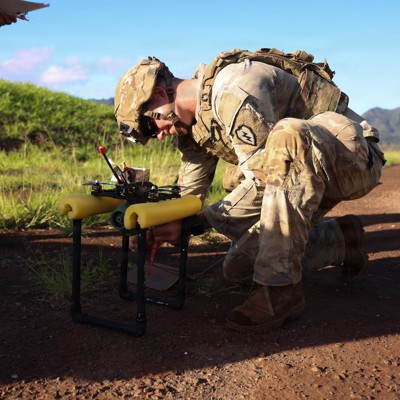
The most operationally salient element for Europe’s defence-industrial ecosystem is prosecutors’ claim that the information included details on Germany’s military support for Ukraine and insights into the national defence industry, particularly firms working on drones and robotics. If substantiated, this points to a collection priority aligned with Russia’s battlefield requirements in Ukraine—where uncrewed systems and counter-UAS measures are iterating rapidly—and with longer-term efforts to map European capacity, bottlenecks, and subcontractor networks. For German and EU procurement officials, the case underscores that industrial security for uncrewed systems programmes must treat human-enabled intelligence collection as a live risk, not a theoretical compliance issue.
Prosecutors also allege the suspect photographed public buildings in Berlin and documented military convoys on German highways, including one linked to a NATO member country, and that he identified potential sabotage targets and offered to recruit others for espionage and sabotage operations. This combination—industrial intelligence collection paired with physical reconnaissance—fits a hybrid-threat profile aimed at degrading European support to Ukraine and complicating NATO’s mobility and sustainment. For Europe, the implication is an elevated need for protective security around production sites, test ranges, logistics nodes, and transit corridors connected to UAS, robotics, and enabling components.
The arrest comes amid broader European concern over Russian intelligence activity since the full-scale invasion of Ukraine, with German officials warning of escalating espionage and hybrid threats. The suspect is expected to appear before an investigating judge at Germany’s Federal Court of Justice to determine pre-trial detention.
Source: Politico.eu