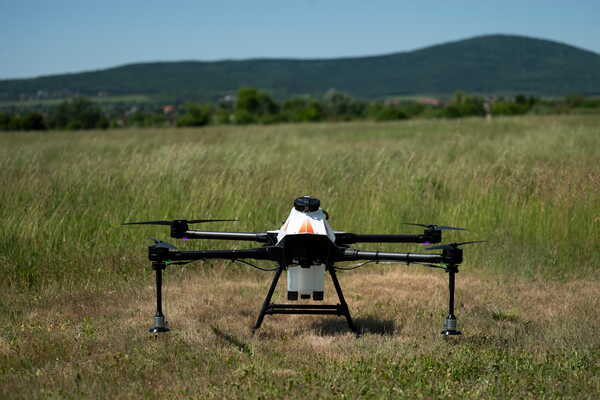
Berlin Commits to Ukraine’s Drone Assault Program; 2026 Aid Surges
Germany commits to developing Ukraine's drone assault units, securing a reciprocal data pipeline for the Bundeswehr. As Berlin shoulders 30% of 2026 aid, focus shifts to extended-range artillery to counter widening drone 'kill zones'.


Key points
- Germany accounts for >30% of Ukraine's 2026 security assistance volume.
- Berlin joins 'innovative project' to build Ukrainian drone assault units.
- Ukraine to transfer frontline drone combat data to the Bundeswehr.
- Artillery procurement shifting to extended-range shells to bypass drone 'kill zones'.
- Continued focus on IRIS-T and Patriot missile sustainment.
3 minute read
Germany’s engagement in Ukraine has evolved from hardware provision to the structural development of assault capabilities. The latest bilateral discussions between Defense Ministers Mykhailo Fedorov and Boris Pistorius confirm Berlin's participation in a specialized project to refine and expand Ukraine's drone assault units. This collaboration is framed as a reciprocal technology transfer; while Germany pledges resources for unmanned systems, the Bundeswehr stands to gain direct doctrinal insight from Ukrainian frontline operations—critical intelligence for European armies currently lacking high-intensity drone warfare experience.
The meeting also underscored Germany's dominance in the 2026 aid landscape, with Berlin reportedly covering over 30% of all announced security assistance volumes for the year. This fiscal weight supports the logistical backbone of Ukraine’s integrated air defense, specifically the long-term missile supply for Patriot and IRIS-T batteries. Notably, the German commitment extends to the PURL project, facilitating the procurement of US-origin weaponry to bolster these defensive layers.
Strategically, the operational focus has shifted toward counter-battery survival. Both ministers highlighted the necessity of extended-range artillery ammunition, explicitly citing the expansion of the drone "kill zone" which renders shorter-range conventional artillery vulnerable. This signals a clear procurement priority for European defense manufacturers: the immediate necessity to increase the effective range of standard 155mm rounds to outrange loitering munitions and maintain fire superiority.
Source: Odessa Journal