Berlin–Rome back Hybrid CoE after US exit, signalling EU self-reliance on hybrid defence
Germany and Italy pledged to strengthen Hybrid CoE and boost EU hybrid-intelligence fusion as the US exits the centre, signalling Europe-led continuity in counter-hybrid defence.


Key facts
- Germany and Italy committed to strengthening the European Centre of Excellence for Countering Hybrid Threats (Hybrid CoE) in a joint plan adopted in Rome.
- The United States withdrew from Hybrid CoE in early January, describing the organisation as “wasteful, ineffective, and harmful.”
- Merz and Meloni backed enhanced EU intelligence-sharing, including the “hybrid fusion cell” within EU INTCEN, alongside critical-infrastructure cyber priorities and strategic communications.
3 minute read
Germany and Italy have moved to reinforce Europe’s institutional architecture for countering hybrid threats by committing to “strengthen” the European Centre of Excellence for Countering Hybrid Threats (Hybrid CoE) in a bilateral plan adopted in Rome. The decision is framed explicitly against an operational backdrop in which Russia has intensified hybrid activity against Europe since the start of the war in Ukraine, including cyberattacks, sabotage against transport links and property, disinformation, drone incursions and attempted assassinations. The underlying strategic assessment cited in the source is that such operations are designed to erode European political cohesion and reduce support for Ukraine.
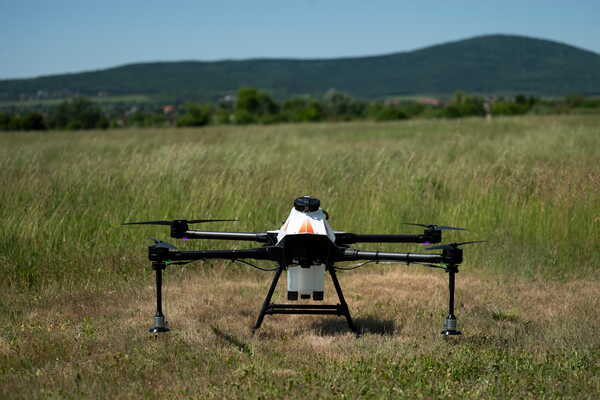
The timing is significant for European defence and security planners because the United States withdrew from Hybrid CoE in early January under President Donald Trump, describing the organisation as “wasteful, ineffective, and harmful.” Whatever the merits of that claim, the practical implication for Europe is increased pressure on EU and non-EU European participants to sustain the centre’s convening power, training, doctrine development and network effects without US political backing. For procurement and aerospace stakeholders, the inclusion of “drone incursions” in the hybrid-threat spectrum reinforces that counter-hybrid posture is no longer confined to information operations and cyber alone; it increasingly intersects with counter-UAS sensing, attribution, and crisis communication, especially around critical infrastructure.
Merz and Meloni’s commitments go beyond disinformation. They pledge exchanges on “hybrid threats, information resilience and strategic communications,” and prioritise cybersecurity measures including critical infrastructure protection, cyber capacity-building projects, and tackling cybercrime. The plan also highlights prioritisation of “disruptive and dual-use technologies” for cyber defence, signalling that Berlin and Rome want to pull innovation pipelines closer to security objectives, potentially expanding demand for dual-use analytics, secure communications and monitoring tools that can support both cyber defence and influence-operation detection.
At EU level, the leaders call for stronger intelligence-sharing capacity, with specific support for the “hybrid fusion cell” within the EU Intelligence and Situation Centre (EU INTCEN). This points toward more structured fusion of indicators across domains—cyber, influence, physical sabotage and unmanned incursions—where European value will depend on data-sharing, common taxonomies, and actionable dissemination to national authorities. The political message is clear: with US participation in some multilateral hybrid-defence structures now less reliable, major EU member states are signalling a European-led continuity plan for counter-hybrid coordination.
Source: Politico Europe