Beyond photography: delivery, spraying and tracking rise for 2026
Delivery, spraying and tracking are emerging as the fastest-growing commercial drone applications, each capturing 5–7% of operations as photography declines.


Key facts
- Delivery, spraying and localization each account for 5–7% of drone operations per Drone Industry Insights (2025).
- Photography’s share fell to 18% in 2025, down from 28% in 2023, as imagery becomes embedded in mapping and inspection workflows.
- Mapping remains dominant at 35%; BVLOS rule changes and sustained funding are accelerating delivery deployments.
2 minute read
Drone Industry Insights’ Global State of Drones 2025 survey (768 respondents across 87 countries) shows the sector quietly shifting away from standalone photography toward mission-driven services: delivery, agricultural spraying/dispensing, and localization/tracking. Each alternative application now commands 5–7% of operations — small relative to mapping’s 35% but strategically important as proof of commercially scalable use cases.
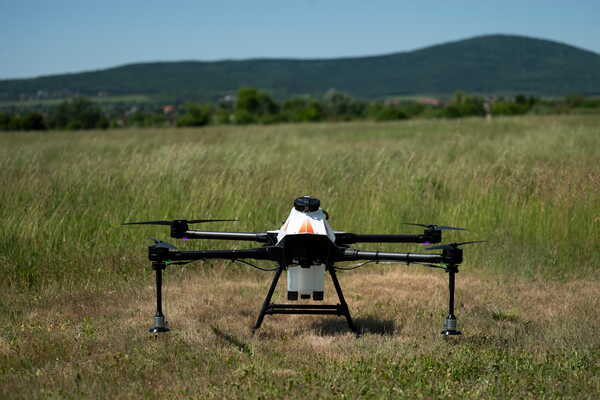
Photography and filming have declined to 18% as image capture becomes a component of mapping, inspection and crop-analysis tasks. Delivery — long discussed, often delayed — is now a real revenue stream in health and remote logistics, helped by steady funding and regulatory movement on BVLOS. Agricultural spraying addresses recurring operational needs: drones reduce soil compaction, reach difficult terrain, and cut costs compared with helicopter operations. Platforms like the DJI Agras T50 typify capability gains: larger tanks, atomized nozzles, and terrain-aware navigation.
Localization and tracking, while less glamorous, deliver daily operational value from livestock monitoring to site equipment tracking and search-and-rescue work, enabled by thermal and multispectral sensors.
For European policymakers and industry actors, the lesson is clear: diversification strengthens resilience and creates specialist market opportunities. Regulators must update approvals, BVLOS frameworks and data/privacy guidance to scale these services safely. Suppliers and operators should prioritise training, certification, and tailored service models for delivery, spraying and tracking to capture growing demand across agriculture, construction and energy sectors.
Source: The Drone Girl