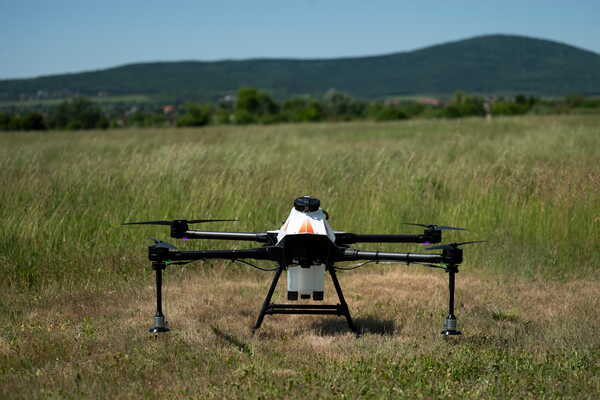
Bulgaria Aims for Nationwide Drone Simulators in Army by Year-End
Bulgaria is accelerating its efforts to integrate drone simulators across all army units by the end of the year. This initiative aims to enhance training and operational readiness, reflecting a broader trend in military modernization within Europe.


Key facts
- Bulgaria plans to deploy drone simulators in every army unit by year-end.
- This initiative aims to enhance military training and operational readiness.
- The move aligns with NATO's focus on modernizing defense capabilities.
4 minute read
Bulgaria’s race to install drone simulators in every army unit by the end of the year is more than a procurement deadline; it is a recognition that the learning curve in modern warfare is steep, expensive, and unforgiving. By mid-December, as Land Forces Commander Major General Deyan Deshkov confirmed, commanders across the country will receive unit-level training devices, marking a shift from viewing drones as specialist equipment to treating them as a standard infantry competency.
The logic driving this overhaul is rooted in the harsh economics of attrition. As Deshkov noted during drills at the Lyulyak training ground, acquiring the hardware is "only 10 percent of the entire process." The real challenge is institutionalizing the muscle memory required to operate these systems without turning the initial batch of airframes into expensive debris. By prioritizing simulators, Bulgaria is adopting a "crawl-walk-run" approach that allows operators to crash virtual drones hundreds of times at zero cost, mastering flight dynamics before they ever risk a live asset.
This strategy has immediate implications for NATO interoperability on the Black Sea flank. Integrating simulation at the point of training allows Bulgarian units to rehearse in contested digital environments—practicing against electronic warfare and GPS jamming—conditions that are difficult to replicate safely with live aircraft outside of specialized ranges. It creates a feedback loop where tactics, techniques, and procedures can be aligned with alliance standards, ensuring that when Bulgarian forces deploy in multinational exercises, they plug seamlessly into the larger command structure.
The rollout is also a signal to the defense industry. While the immediate demand is for training software, the roadmap includes a follow-on wave of First Person View (FPV) systems and loitering munitions. This transition requires a robust industrial base, underscored by Sofia’s recent billion-euro agreement with Rheinmetall to produce 155mm artillery shells and gunpowder locally. However, moving from bespoke pilots to a nationwide pipeline raises the stakes for cyber hygiene; defense leaders must now ensure that these distributed simulators share a secure, common architecture to avoid fragmentation.
Ultimately, Bulgaria is betting that the future of defense lies as much in software as in steel. If this initiative succeeds, the metric of victory will not just be the number of drones in the inventory, but the "kill chain" speed of the units using them. By the time 2026 arrives, the goal is to have a force that has already fought a thousand virtual sorties, ready to deliver effects on the battlefield without the hesitation that comes from inexperience.