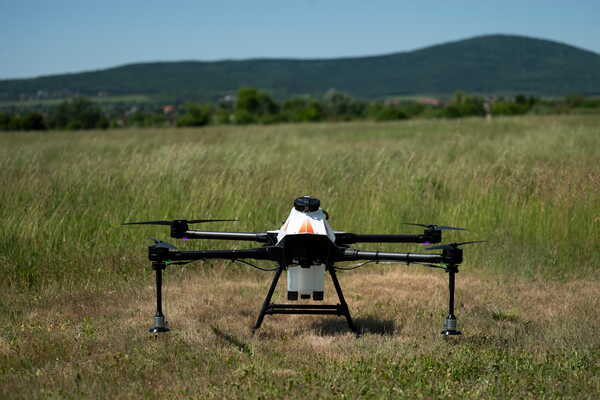
Bulgaria to Enhance Military Capabilities with Drone Simulators
Bulgaria is set to equip its military units with advanced drone simulators and expand its unmanned systems capabilities. This initiative aims to bolster the country's defense readiness and operational efficiency in the face of evolving security challenges in Europe.


Key facts
- Bulgaria plans to equip military units with advanced drone simulators.
- The initiative aims to enhance operational readiness and tactical training.
- This investment aligns with NATO's focus on modernizing military capabilities.
2 minute read
Bulgaria’s plan to field advanced drone simulators is a pragmatic way to lift readiness, compress training time, and manage costs. High fidelity simulation lets crews rehearse ISR, target acquisition, and strike coordination in realistic scenarios without airspace constraints or attrition. It also builds a repeatable pipeline for operators and mission commanders, which small forces often lack.
The decision aligns with NATO priorities shaped by the war in Ukraine. Allies are shifting toward unmanned teams that can sense, strike, and survive in denied environments. Simulators are the fastest tool to standardize tactics, communications, and data flows, so Bulgarian units can integrate smoothly into multinational task groups, joint fires networks, and Black Sea surveillance missions.
Geography reinforces the case. Bulgaria sits on the Alliance’s southeastern flank, exposed to Black Sea tension and persistent electronic warfare. Synthetic training can harden crews against jamming, spoofing, and GPS loss, while sharpening airspace deconfliction and command and control. It also strengthens counter UAS skills for base defense and maneuver formations.
There are industrial and policy dividends. A simulator program can anchor cooperation with allied vendors, offer workshare for local integrators, and tap EU instruments such as the European Defence Fund. Early investment in training, doctrine, and standards lowers lifecycle risk, reduces sustainment costs, and avoids fragmented purchases that dilute interoperability.
The payoff is a scalable operator base that can extend across air, land, maritime, and special operations units within a few years, paired with regular allied exercises to validate tactics. For neighbors, it signals that the path to effective UAS capability starts with training and integration, not platform counts. Europe’s defense is moving toward cheaper, faster, networked autonomy.
You might also read...
 Mr. T (Curator)
 Mr. T (Curator)
 Mr. T (Curator)