Bundeswehr grounds Quantum Systems drones after cyberattack
A reported October cyberattack on Quantum Systems led the Bundeswehr to temporarily ground many drones, highlighting Europe’s rising UAS supply-chain cyber risk.

Key facts
- Quantum Systems was reportedly hit by a major cyberattack in October
- The Bundeswehr temporarily grounded a large number of Quantum Systems drones as a precaution
- Other major drone manufacturers were reportedly targeted, underscoring rising cybersecurity pressure on Europe’s drone industry
3 minute read
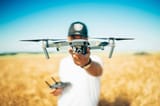
German drone manufacturer Quantum Systems was reportedly hit by a major cyberattack in October, prompting the Bundeswehr to temporarily ground a large number of the company’s drones as a precautionary measure. The limited source excerpt does not provide technical detail on the incident, including whether operational networks, build systems, telemetry back ends, update infrastructure, or sensitive customer data were affected; nor does it clarify the duration of the grounding or the criteria used to clear airframes back into service.
Even so, the reported response is instructive for European defence users and suppliers. A decision to ground platforms on the basis of an OEM cyber incident reflects an assumption that compromise can propagate through software updates, configuration tools, mission-planning pipelines, or support channels into deployed fleets. In an operational context, that translates into concerns about integrity of flight software, payload tasking, geofencing, navigation inputs, and data confidentiality—risks that can force commanders to trade sortie generation against potential adversary access or sabotage.
The report further notes that other major drone manufacturers have also been targeted by hackers. If accurate, this points to sustained interest in Europe’s drone industrial base, likely driven by the growing role of small and medium UAS in intelligence, surveillance, reconnaissance and tactical strike support, as well as by Europe’s political push to de-risk dependence on Chinese suppliers. For European procurement, the practical implication is that cybersecurity requirements must extend beyond the air vehicle to the full ecosystem: ground control, cloud services, maintenance tooling, software supply chain, and incident response. Absent that, a single compromise at the vendor level can produce fleet-wide availability shocks at short notice.
Source: Dronewatch.eu