Can Poland's K2PL Tank Withstand FPV Drone Swarms?
Poland’s K2PL tanks face growing vulnerability from low‑signature FPV drone swarms that can overwhelm APS unless layered counter‑UAS and electronic warfare measures are integrated.


Key facts
- K2PL is Poland’s localised K2 Black Panther main battle tank, enhancing mobility and firepower.
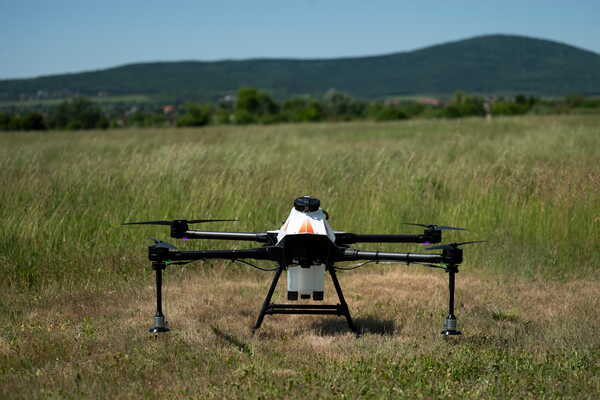
- FPV drone swarms are small, low‑signature threats that can approach from above and attempt saturation attacks.
- APS is useful against missiles and larger UAS, but layered C‑UAS (EW, sensors, kinetics, tactics) is required for FPV swarms.
2 minute read
Poland’s K2PL programme brings a modern, highly mobile main battle tank to NATO’s eastern flank, but contemporary battlefield threats have evolved faster than many legacy assumptions about armour protection. FPV drone swarms—small, agile quadcopters flown with live video feeds and often coordinated via simple mesh links—present problems that differ from the anti‑tank guided missiles (ATGMs) and rocket‑propelled grenades that most active protection systems were built to defeat. Such drones have tiny radar and thermal signatures, can approach from above where armour is thinner, and can attempt massed or sequential attacks that saturate hard‑kill interceptors.
Active protection systems retain value: modern APS detect and defeat high‑speed, larger projectile threats and can be effective against some larger rotary or fixed‑wing UAS. However, APS performance degrades when confronted with very small, low‑velocity, highly manoeuvrable FPV platforms or simultaneous multi‑vector attacks. Sensors can misclassify drones as clutter or birds, and single‑shot interceptors have finite magazine depth.
The practical mitigation is layered defence. That means integrating APS into a broader C‑UAS architecture: electronic warfare suites to deny command, control and navigation; short‑range kinetic guns and directed‑energy systems for high engagement tempo; improved sensors (acoustic, visual, radar fusion) tuned to small RCS signatures; and tactical changes—masking, dispersion, smoke, and combined arms support. Training and doctrine must adapt too: crews should expect drone harassment, use turrets and blinds judiciously, and coordinate with organic and theatre EW assets.
For Poland, the policy implication is clear: procurement and integration choices for the K2PL must prioritise modular C‑UAS interfaces, NATO interoperability, and investment in EW and directed‑energy development rather than relying on APS alone.
Source: Defense Express