
Countering the drone threat to heavy armour
Source content insufficient for automated analysis; the feed excerpt is truncated and lacks the article’s factual detail and conclusions.

Key Intelligence
- FPV drone effectiveness against heavy armour is estimated at 20-40%, often requiring multiple assets to achieve a 'kill'.
- Active Protection Systems (APS) are evolving to include specific counter-UAV modes, as seen in the Trophy and Arena-M upgrades.
- Next-generation MBT programs (MGCS, M1E3) are prioritizing weight reduction to under 50-60 tonnes to allow for sensor and EW growth margins.
3 minute read
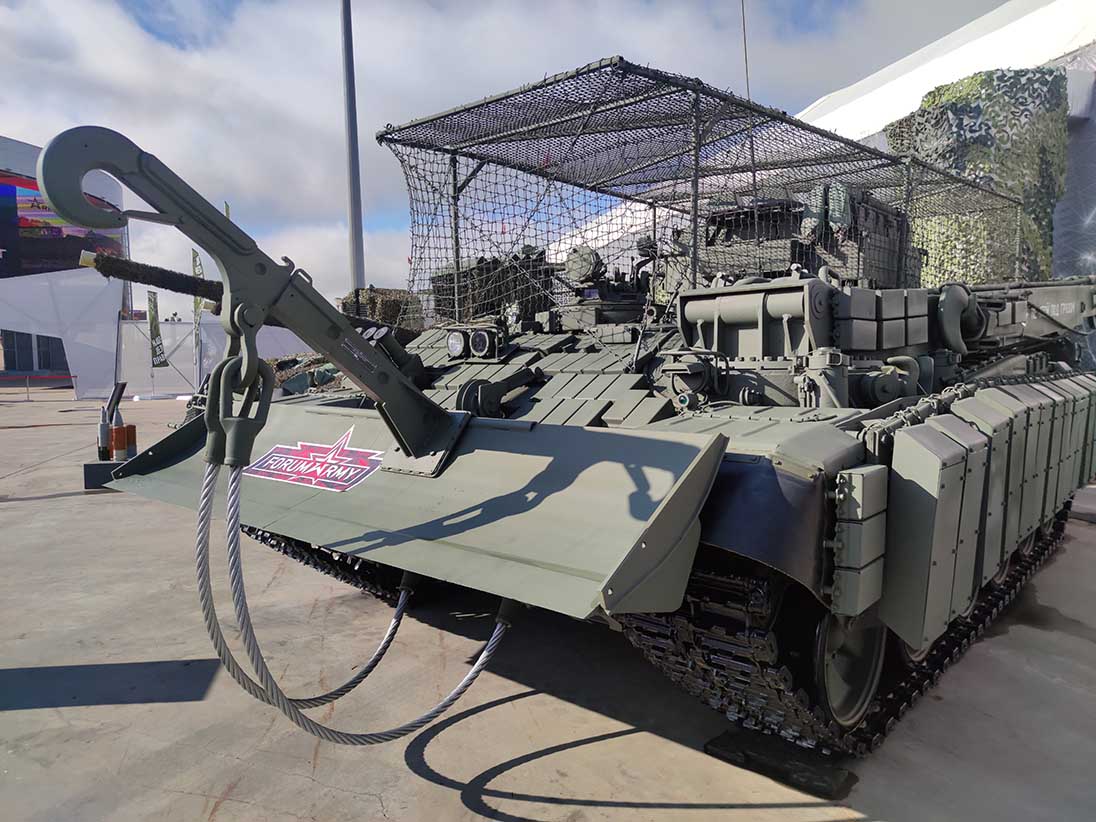
The persistent narrative of the tank's obsolescence in the face of First-Person View (FPV) drones and loitering munitions is increasingly unsupported by empirical data. While the lethality of unmanned aerial vehicles (UAVs) is undeniable, unverified combat footage often masks a modest real-world effectiveness rate, estimated by frontline commanders to be between 20% and 40%. For European defense planners, the takeaway is not the abandonment of the Main Battle Tank (MBT) but the urgent requirement for a '360-degree plus overhead' protection architecture. The emergence of standardized 'top-attack' screens, now adopted by over 20 nations, signals a shift from ad-hoc field modifications to serial industrial production.
Technological responses are bifurcating into kinetic and non-kinetic streams. On the kinetic front, the 'democratization' of Active Protection Systems (APS), such as the Trophy and Iron Fist, is making these once-premium systems a baseline requirement for new platforms like the Leopard 2A8 and M2A4E1. Simultaneously, the integration of Electronic Warfare (EW) jammers directly into the factory-standard package—a move already standardized by Russia’s Uralvagonzavod—indicates that spectrum dominance is now as critical as steel thickness. For European manufacturers, this necessitates a modular approach where EW and APS are baked into the hull design rather than bolted on as afterthoughts.
Ultimately, the individual vehicle cannot solve the drone problem in isolation. The tactical shift toward 'countering the essence of the threat'—targeting UAV command nodes, operators, and logistics—mirrors the suppression of machine-gun nests in the First World War. European doctrine must evolve to integrate counter-drone capabilities at the lowest tactical echelons. Future platforms like the MGCS must balance a reduced weight profile (sub-50 tonnes) with the power margins required to run sophisticated sensor suites and autonomous Remote Weapon Stations (RWS). The tank is not dead; it is simply becoming the centerpiece of a much more complex, electronic, and verticalized combined-arms network.
Source: European Security & Defence