Croatia Implements Drones for Enhanced Border Surveillance
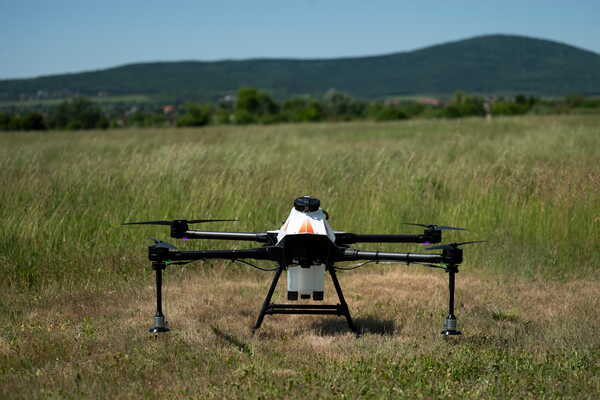
Croatia is set to enhance its border security by deploying drones for aerial surveillance. This initiative aims to bolster monitoring capabilities and improve response times to illegal crossings and other border-related incidents.


Key facts
- Croatia will deploy drones for real-time aerial surveillance of its borders.
- The initiative aims to enhance border security and response times to illegal crossings.
- This move aligns with EU efforts to strengthen external border management.
2 minute read
Five years after its initial rollout, Croatia's integrated drone surveillance system has become an indispensable backbone of its border security strategy, marking a significant evolution in how the nation, and indeed the European Union, manages its external frontiers. The once novel decision to deploy unmanned aerial systems (UAS) now stands as a widely adopted standard, reflecting a maturing response to persistent migration pressures, geopolitical shifts, and sophisticated security threats that continue to define the mid-2020s.
"Our investment in UAS technology has paid dividends," stated Interior Minister Ivan Perišić during a recent press briefing. "The real-time intelligence gathered by our drone fleet provides an unparalleled advantage, allowing our border patrols to operate with precision and efficacy that was unimaginable a decade ago."
The drones, initially deployed to monitor remote border areas, have evolved into highly sophisticated platforms. Equipped with advanced thermal imaging, AI-powered anomaly detection, and long-range optics, they now form part of a seamless network that feeds directly into centralized command centers. This integrated approach allows for swift identification of irregular crossings, rapid deployment of ground units, and enhanced inter-agency cooperation. The system's robustness has proven critical in addressing not only individual asylum seekers but also more organized criminal networks involved in human trafficking and other illicit activities.
This Croatian initiative has not merely improved national operational efficiency; it has significantly contributed to a more cohesive, albeit increasingly technologically driven, approach to border management across the wider European Union. Experts from Frontex commend Croatia's model as an exemplar of effective digital border control, influencing similar deployments in other EU member states facing similar challenges on their external fringes.
Source: https://www.hrt.hr/
You might also enjoy reading...
 Mr. T (Curator)
 Mr. T (Curator)
 Mr. T (Curator)