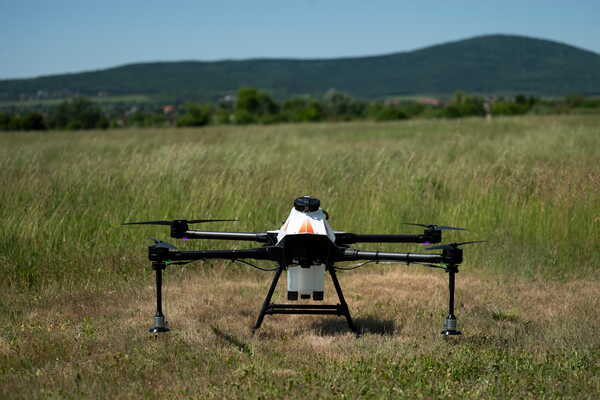
Denmark's Drone Ban Signals Need for Advanced Counter-UAS Systems
Denmark has imposed a nationwide ban on civilian drone flights ahead of significant EU summits in Copenhagen. This decision follows unauthorized drone sightings near airports, highlighting the urgent need for effective counter-UAS systems that can differentiate between friendly and hostile drones.


Key facts
- Denmark bans all civilian drone flights until Friday.
- The ban is in response to unauthorized drone sightings over airports.
- The need for systems that can distinguish friend from foe is critical.
2 minute read
Denmark’s nationwide halt to civilian drones is a quick way to reduce risk, but it also shows Europe’s tendency to default to blanket airspace denial when counter-UAS capacity is not deployed at scale. Airports and summit venues remain exposed to small, low-cost platforms that are easy to field and hard to attribute. The short-term effect is a cleaner air picture; the strategic takeaway is a persistent capability gap — one already visible in Europe’s rearmament struggles.
The durable solution is layered counter-UAS, not prolonged bans. Detection should combine radio-frequency sensing, radar, electro-optical, and acoustic feeds, integrated with air traffic control and public safety systems. Identification must move beyond uneven Remote ID adoption and spoofing risk. Authorities need reliable friend-or-foe logic that fuses Remote ID, flight permissions, geofencing status, and sensor tracks in real time. This requires shared data standards, authenticated links, and auditable access between civil and security networks — principles already emerging in projects like the EU’s 2027 anti-drone system initiative.
Governance is as decisive as technology. Member states should clarify who commands low-altitude defence around critical sites, with pre-delegated authority to detect, decide, and defeat. Electronic countermeasures face EU legal limits, so rules must define when to disrupt control links or navigation signals, and how to employ kinetic or capture effectors with minimal collateral risk. Standardised evidence handling and incident reporting will support prosecution and enable cross-border intelligence sharing, a theme echoed in Europe’s Defence Readiness Roadmap 2030.
For NATO and the EU, the gap sits inside integrated air and missile defence. Allies need a common operating picture for the very low tier, cross-border alerting, and interoperable effectors aligned to STANAG-like interfaces. Funding through the European Defence Fund and urgent procurement should back scalable systems proven in airport environments, with open command and control that allows national modules — as seen in Indra’s European expansion, which mirrors this drive toward networked architectures.
Airports, police, and military units should train together, rehearse rules of engagement, and use dynamic risk zoning that preserves legitimate drone operations as threat levels change. Integration with U-space services can help deconflict commercial activity while maintaining security, as highlighted during Germany’s counter-UAS research initiatives.
Europe’s defence will ultimately be shaped by who controls the low sky — not just through restrictions, but through scalable, interoperable defences that turn airspace from a liability into a protected layer of national resilience.
You might also like to read....
 Mr. T (Curator)
 Mr. T (Curator)
 Mr. T (Curator)