Drone Maker's CEO Urges Military Procurement Overhaul in Europe
Uwe Horstmann, the new CEO of Stark, emphasizes the need for Europe to rethink its military procurement strategies. As the first chief executive of the German drone start-up, Horstmann aims to influence how defense contracts are awarded, particularly in the drone sector.


Key facts
- Uwe Horstmann is the first CEO of Stark, a German drone start-up.
- Stark is backed by investors including Peter Thiel.
- Horstmann advocates for a re-evaluation of military procurement in Europe.
- The company aims to enhance Europe's defense capabilities with drones.
- Stark focuses on innovation within the military drone sector.
5 minute read
Europe’s defence establishment is being urged to rethink how it arms itself for an era defined by drones and algorithmic warfare. Uwe Horstmann, the new chief executive of German drone manufacturer Stark, warned that outdated procurement systems and rigid industrial planning are leaving the continent vulnerable as battlefield technology evolves at unprecedented speed.
Speaking to the Financial Times, Horstmann said Europe must overhaul how it buys and deploys weapons if it wants to maintain deterrence and relevance in modern war. “When and how do we want these drones? How many of them? What do we do with them? Do we store them? Do we update them?” he asked, calling for a rethink of the continent’s entire defence production cycle. His remarks echo growing concern among European military leaders that traditional, years-long procurement processes cannot keep pace with a war where drones and software updates define success or failure in real time.
The transformation of warfare is on full display in Ukraine, where uncrewed aerial systems have become the dominant tool of both attack and surveillance. Drones are believed to account for up to 80 percent of Russian frontline losses, underscoring their impact on modern tactics. Ukrainian forces, often working with small teams of engineers and civilian coders, have demonstrated how rapid iteration and low-cost innovation can offset traditional firepower.
Horstmann’s comments come as Berlin moves to scale up its own drone capabilities. Defence Minister Boris Pistorius recently pledged to invest €10 billion in military drones, describing them as essential to Germany’s contribution to NATO’s air and missile defence shield. The country’s top general, Carsten Breuer, has also argued that Europe must shift toward more flexible contracts that enable the military to buy fast, test quickly and upgrade continuously rather than stockpile systems that are technologically obsolete by the time they enter service.
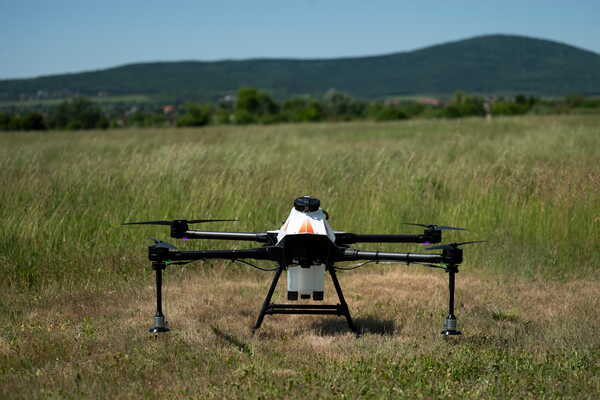
Stark, based in Berlin, has quickly emerged as one of Europe’s leading attack drone firms. Valued at around $500 million after its August funding round, the company is testing its Virtus combat drones with the Bundeswehr alongside rival Helsing. It has also developed its own command-and-control platform, Minerva, and maintains a technical team in Ukraine, where it gathers direct battlefield feedback. Horstmann said Stark’s drone software ideally should be updated “every week,” a pace that highlights the challenge for regulators and militaries accustomed to slower certification cycles.
The company’s rise illustrates how Europe’s defence landscape is shifting toward tech-driven, dual-use innovation that blends civilian engineering talent with military applications. While Horstmann declined to discuss specific government contracts, he confirmed Stark has “multiple” deals under way, suggesting growing institutional confidence in Europe’s homegrown drone sector.
For policymakers in Brussels and national capitals, the message is increasingly clear: the continent’s deterrence will depend as much on code and sensors as on tanks and jets. The speed at which drones evolve—both as tools of war and as targets—demands procurement models that mirror the agility of the private tech sector rather than the bureaucracy of traditional defence ministries.
Europe’s rearmament plans, from Germany’s drone expansion to the EU’s new Defence Industrial Strategy, all point to the same conclusion. The wars of the future will be fought by networks as much as by nations, and the ability to adapt faster than the adversary may prove Europe’s most decisive weapon.
Summary
Uwe Horstmann, the new CEO of Stark, emphasizes the need for Europe to rethink its military procurement strategies. As the first chief executive of the German drone start-up, Horstmann aims to influence how defense contracts are awarded, particularly in the drone sector. Backed by notable investors like Peter Thiel, Stark seeks to innovate within the military landscape and enhance Europe's capabilities in unmanned aerial systems.