Drones as a Solution for Global Reforestation Efforts
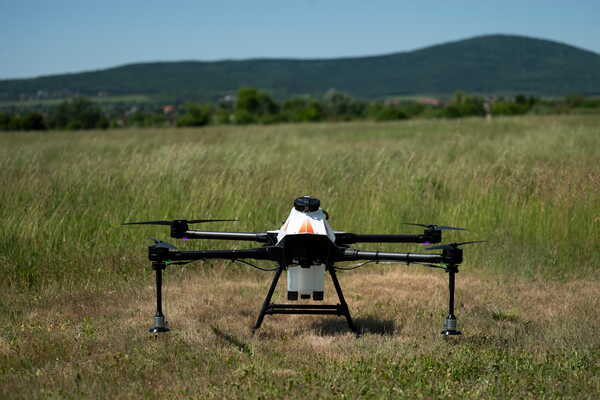
Drones are emerging as a vital tool in global reforestation initiatives, offering innovative solutions to tackle deforestation and promote biodiversity. Their ability to cover vast areas quickly and efficiently makes them a game-changer in environmental conservation efforts.

Key facts
- Drones can plant seeds in hard-to-reach areas, enhancing reforestation efforts.
- They provide real-time data on forest health and biodiversity.
- European projects demonstrate significant success in using drones for reforestation.
3 minute read
As governments across Europe race to meet ambitious reforestation targets, the humble spade is being replaced by high-tech swarms. Drones, once relegated to experimental pilots, are rapidly becoming a core capability in European land management, offering a unique solution to the dual challenges of climate resilience and strategic defence.
The technology behind this shift is sophisticated. Uncrewed systems are no longer just flying cameras; they are now fully integrated agricultural platforms. They map degraded terrain using LiDAR and hyperspectral sensors to analyze soil health before optimizing species mixes for specific microclimates.
"One drone can spread about 50 hectares a day. It means two people, one drone, it's about 1,000 hectares a month," explains Gregory Maitre of French start-up MORFO, noting the massive efficiency gap compared to traditional methods where workers might cover only a single hectare daily. This capability is critical for accessing steep or remote areas where human labor is dangerous or prohibitively expensive. "It's a huge gap when you compare it to the traditional way of drone restoration," Maitre adds.
However, the implications extend far beyond planting trees. The policy task now facing Brussels is to plug this capacity into the EU Green Deal’s heavy machinery—specifically the Nature Restoration Law and Common Agricultural Policy (CAP) eco-schemes. Experts argue that funding must move away from simple "per-hectare" payments toward performance metrics that reward verified canopy recovery and habitat quality.
While the European Union Aviation Safety Agency (EASA) has opened the door to safer "beyond visual line of sight" (BVLOS) flights via its U-space rules, significant hurdles remain. Member states are still struggling to harmonize corridors, spectrum management, and data standards. Without these, the sector risks remaining stuck in a "demonstration phase" rather than scaling to routine operations.
Perhaps most surprisingly, the push for green drones is finding an audience in military circles. For NATO allies, climate resilience is increasingly viewed as a readiness issue. Drone-enabled reforestation can stabilize soils to prevent landslides near bases, reduce flood and fire risks, and improve training range microclimates.
"From a military perspective, we need to better understand the short, medium and long-term implications of climate change on NATO mission accomplishment," says Colonel Giancarlo Turco, Chairman of the NATO Military Working Group on Climate Change and Security.
The strategic overlap is clear: the same fleets used to plant forests can pivot to disaster response, permissive intelligence, surveillance, and reconnaissance (ISR), or last-mile logistics during crises.
To secure this future, public procurement needs to change. Demanding open architectures and "cyber hardening" in drone tenders would create a dual-use pipeline, supporting both civil protection and defence industries. Building European supply chains for batteries and navigation systems is equally vital to limit exposure to contested suppliers.
If Europe treats ecological data as strategic infrastructure—funding interoperable repositories and aligning state aid—it can drive down costs and secure a technological edge. In doing so, "green drones" will not only shape the continent's environmental resilience but define the future battlespace.