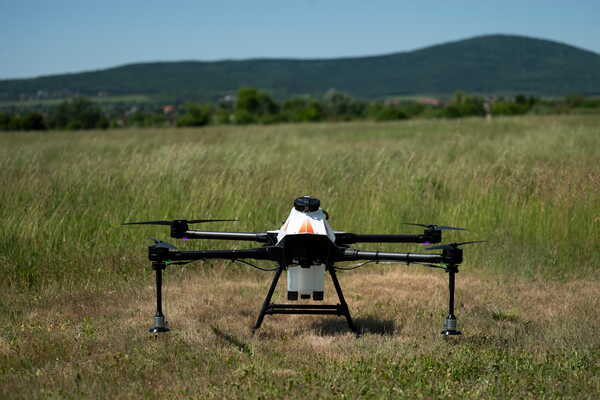
Drones Enter Moldova Amid Russian Attacks on Ukraine
In a recent escalation, seven drones crossed into Moldova during a Russian overnight offensive on Ukraine. One drone crashed into a residential home, raising concerns about the spillover effects of the conflict. This incident underscores the growing risks associated with drone warfare in the region.


Key facts
- Several drones entered Moldovan airspace during a Russian attack on Ukraine.
- One drone crashed into a residential home, causing potential civilian risk.
- The incident raises concerns about airspace security and regional stability.
3 minute read
The recurring spillover of Russian drones into Moldovan airspace is more than a navigational error, it is a stress test for a region operating on the razor's edge of neutrality and defense. For the residents of villages like Cuhurestii de Jos, where a drone crashed just 50 kilometers from the Ukrainian border in late November, the war is no longer an abstract headline. It is a physical hazard landing on their rooftops.
As Moldovan President Maia Sandu bluntly stated following the incursions, these platforms are "on their way to kill civilians," transforming her country’s airspace into an unwilling transit corridor for Moscow's offensive. The tactical reality is that low-altitude, expendable drones are slipping through the cracks of radar coverage, exploiting the "grey zone" between a neutral state with constrained budgets and a NATO member with strict rules of engagement.
This vulnerability has forced a reckoning in Chișinău and Brussels. The immediate response has been a mix of diplomatic protest and urgent financial triage. While the EU has pledged €20 million to upgrade Moldova’s air defense, officials like Kaja Kallas have made it clear that "Moldova's skies cannot become a casualty of Russia's war." However, money takes time to translate into hardware. In the interim, the gap in capability is glaring. Security expert Artur Leșcu characterized the November incidents as a "violation of sovereignty," noting that Russia is effectively employing Moldovan airspace for "wartime activities" without fear of kinetic reprisal.
The solution, according to local experts, must start with information before interception. Pavel Horea has argued that the "only plausible method" for immediate protection is to adopt a system similar to Romania’s "RO-Alert," capable of warning citizens of incoming danger in real-time. "All drones are dangerous," Horea warned, emphasizing that even unarmed decoys pose a lethal threat to infrastructure and the public.
For NATO, this is now a "border-adjacent" security problem that defies neat jurisdictional lines. Romania’s air defense network tracks these threats, but pulling the trigger on a target over non-allied territory remains a political minefield. As Romanian Defense Minister Ionuț Moșteanu noted during the crisis, "We are not at war," a sentiment that underscores the hesitation to authorize engagements that could be misconstrued as escalation. This ambiguity benefits Russia, which uses these incursions to strain Western attention and resources.
Ultimately, the response cannot be left to ad-hoc decisions made in the heat of the moment. The path forward requires a predictable, technical architecture: shared radar pictures, pre-agreed intercept protocols, and a dense sensor network that denies impunity to the aggressor. Until then, Moldova remains in a precarious waiting game, relying on diplomatic shields to protect against kinetic threats.