
Dronetag Unveils Long-Range Remote ID Receiver for Drone Monitoring
Dronetag has introduced the Scout, a Remote ID receiver capable of detecting drones up to 25 km away. This advanced system enhances situational awareness for aviation authorities and security agencies, providing real-time data on drone activity.

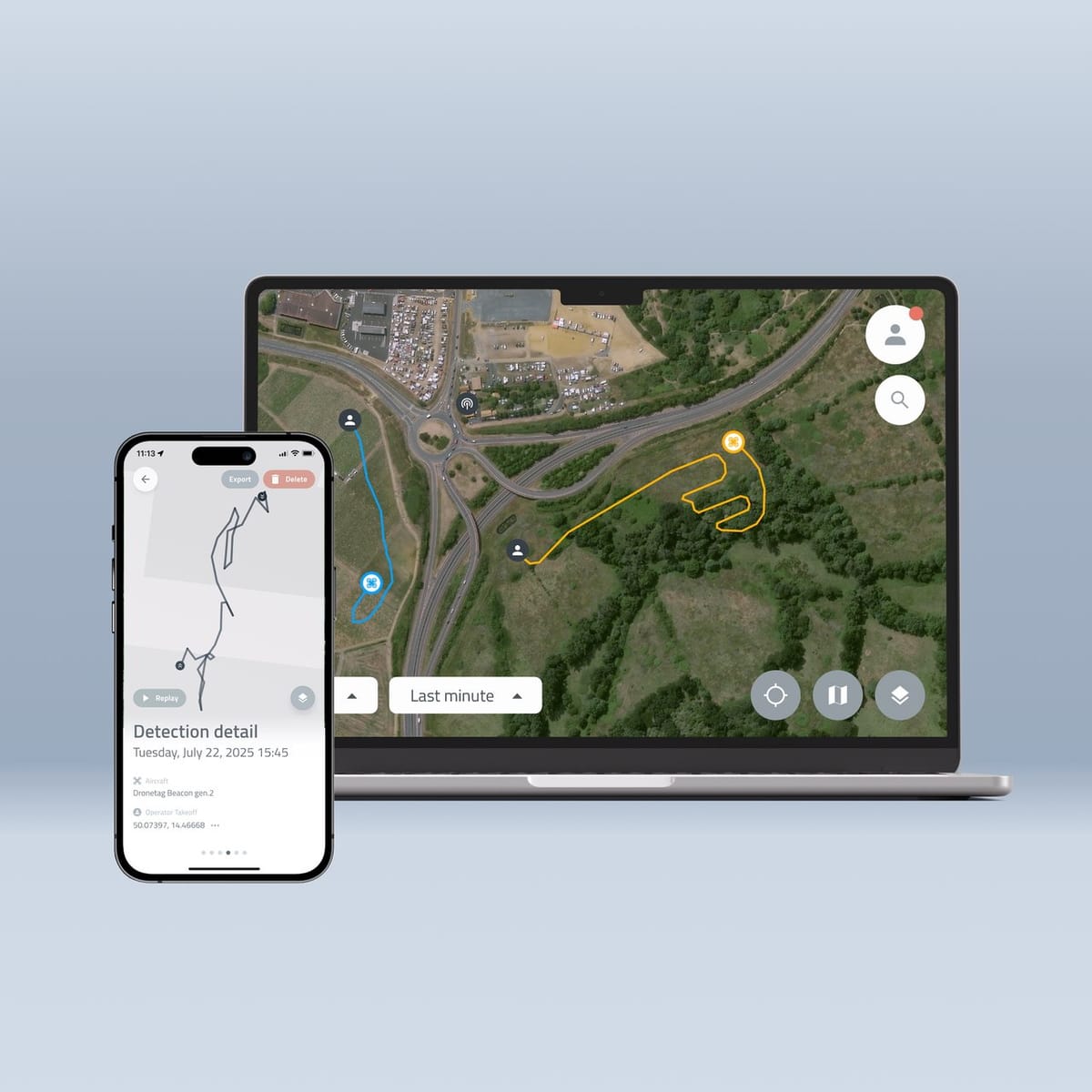
Key facts
- Dronetag Scout detects drones up to 25 km away, enhancing airspace monitoring.
- Supports multiple configurations and operational modes for flexible deployment.
- Only detects drones with Remote ID signals; older models remain undetected.
2 minute read
Dronetag’s Scout makes Remote ID a practical layer for wide-area drone awareness in Europe. With detection out to 25 km and the option to network multiple units, it aligns with U-space and national counter-UAS strategies that prioritise identification and accountability. Airports, energy operators and police can stitch receivers into corridors and approach paths to maintain a persistent picture. Optional directional antennas enable standoff monitoring from secure sites.
The limitation is equally clear. Scout only sees drones that broadcast Remote ID, so legacy, improvised or hostile systems can evade it. This places the device as one component in a layered defence, alongside radar, RF anomaly detection, optical sensors and lawful effectors. Even so, Remote ID can filter routine commercial and recreational traffic, lowering false alarms and enabling proportionate, evidence-based responses.
Regulatory momentum favours this approach. EU rules are driving Remote ID across new platforms, expanding compliant targets without resorting to disruptive measures. Pilot location and device metadata support enforcement and investigations, subject to GDPR and national retention constraints. Because the receiver can be networked and integrated via APIs, NATO and cross-border operators can share airspace data around critical sites and temporary restricted zones.
At €2,499 per unit, municipalities and site operators can build affordable perimeter grids, while national authorities can backfill gaps in existing counter-UAS coverage. The priority now is authentication and anti-spoofing across Remote ID standards, so that detections are verifiable and actionable. Europe’s defence posture is shifting toward persistent, data-led control of low-altitude airspace.