EU Advances Dual-Use Research Funding Initiative
The European Parliament and Council are nearing an agreement to broaden the Horizon Europe program to include funding for dual-use projects, which can serve both civilian and military purposes.


EU Advances Dual-Use Research Funding Initiative,
Key facts
- EU nearing agreement to include dual-use projects in Horizon Europe funding.
- Focus on enhancing strategic autonomy and defense capabilities.
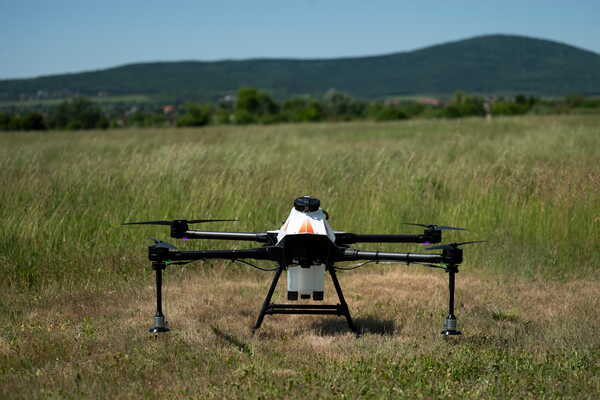
- Research may cover critical areas like drones and cybersecurity.
2 minute read
The decision to allow dual-use projects under Horizon Europe marks a strategic shift, aligning the EU’s flagship civilian research programme with the bloc’s security agenda without turning it into a defence fund. The change would open mainstream grants for AI, robotics and drones, cyber, space, semiconductors, and advanced materials, areas where Europe struggles to scale. It complements the European Defence Fund and new industrial tools, creating a pipeline from basic research to capability development and reducing reliance on external suppliers for critical technologies and components.
Guardrails will matter. Weapons design and testing remain excluded, and projects will face ethics reviews, export-control compliance, and strict due diligence on end use and intellectual property. The Commission and national agencies must clarify what counts as dual use, how proposals involving military end users will be assessed, and how sensitive results will be handled. Without clear guidance, universities and SMEs may self censor, yet the war in Ukraine and rapid threat evolution argue for faster cycles, more field experimentation, and smoother routes from labs to deployment.
For NATO, better funded dual-use R&D can accelerate capability maturation that supports common standards and interoperability. The EU will need tight coordination to avoid duplication and to keep channels open to trusted transatlantic partners while protecting key technologies. Associated country participation and foreign ownership will be flashpoints, alongside procurement pathways that pull innovations into service. Delivery will hinge on simple rules, rapid calls, and measurable impact on resilience. If executed, the policy can turn scattered pilots into scalable pipelines for drones, cyber defence, and sensing. Europe is moving toward a more integrated civil military innovation model for modern warfare.
You might also enjoy...
 Mr. T (Curator)
 Mr. T (Curator)
 Mr. T (Curator)