EU readies €9B first tranche of €90B Ukraine loan, with €5.9B for drones
Brussels is set to unlock a first >€9B tranche of its €90B Ukraine loan, including a €5.9B EU purchase of drones and €3.2B in budget support, with repayment potentially tied to Russian reparations or frozen assets.


Key facts
- EU officials say the Commission is preparing to approve terms for a €90B EU-backed loan to Ukraine, enabling a first tranche of >€9B in mid-June.
- Planned first tranche: €5.9B for the Commission to purchase drones “from Ukraine, for Ukraine,” plus €3.2B transferred to Kyiv for budget needs including soldiers’ salaries.
- Repayment is expected to be linked to Russian war reparations; if reparations are not paid, EU leaders reserve the option to use frozen Russian state assets (mostly held in Belgium) to settle the loan.
3 minute read
The Commission is moving to formalise the conditions underpinning the EU’s €90 billion loan to Ukraine, with officials indicating the relevant memorandum of understanding could be unveiled imminently and used to unlock an initial disbursement of more than €9 billion in mid-June. The first tranche is designed as a mixed instrument: a direct EU purchase of drones valued at €5.9 billion alongside a €3.2 billion transfer to Kyiv to bridge immediate fiscal gaps, including funding for state administration and soldiers’ pay. This sequencing matters operationally because it hardwires a sizeable, near-term procurement action into what is otherwise framed as macro-financial assistance, reducing Kyiv’s exposure to delays in national budget processes while placing Brussels closer to the defence demand signal.
The repayment architecture is politically and strategically significant. EU leaders agreed in December to fund the loan via joint debt issuance after negotiations faltered over a proposal to leverage frozen Russian state assets. The current approach appears to preserve that option as a contingent mechanism: the Commission and Ukraine are expected to discuss fine print linking repayment to Russian war reparations, with EU leaders reserving the right to use frozen Russian sovereign assets—concentrated in Belgium—to settle the loan if Moscow refuses to pay. For European officials, this creates both leverage and risk: leverage in that the assets remain a credible backstop, and risk in that any move to execute against principal would likely invite legal challenges, financial-market signalling concerns, and Russian retaliation, all of which could affect European financial stability and security posture.
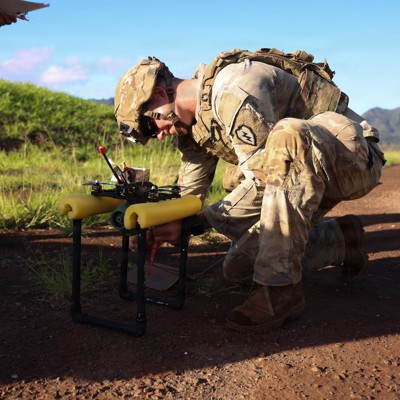
For Europe’s defence-industrial and procurement community, the explicit earmarking of €5.9 billion for drones “from Ukraine, for Ukraine” implies a deliberate preference to inject funding into Ukraine’s domestic drone production base rather than sourcing primarily from EU primes. That strengthens Ukraine’s wartime manufacturing autonomy and may accelerate design iteration cycles driven by front-line feedback, but it also limits near-term demand capture for European UAV manufacturers. The EU nonetheless benefits from the operational learning pipeline and potential future industrial partnering with Ukrainian firms, particularly in expendable FPV-class systems, counter-UAS measures, and distributed manufacturing.
Finally, the article underscores a looming funding cliff. Ukraine’s stated budget shortfall is at least €135 billion over this year and next, and officials reportedly view assumptions of a near-term war end as increasingly unlikely. With EU capitals facing tighter fiscal conditions and sensitivity to further common debt, the drone-linked tranche may be as much a political tool—demonstrating tangible defence output—as a financial one, while debates on using Russian sovereign assets are likely to recur ahead of the next crunch.
Source: POLITICO Europe