EU Urged to Prioritize Drone Operator Training Over Production
A Ukrainian expert emphasizes the need for the EU to focus on building training centers for drone operators rather than solely concentrating on drone production.

Key facts
- Ukrainian expert advocates for more drone operator training facilities in the EU.
- Focus on skills development is crucial for adapting to battlefield dynamics.
- Current EU strategy prioritizes drone production over operator training.
- Training centers could enhance operational effectiveness in military contexts.
- Adaptability is key to leveraging drone technology in combat situations.
5 minute read
Europe’s push to expand its drone capabilities risks overlooking a vital dimension of modern warfare: operator training and tactical proficiency. According to veteran Ukrainian drone specialist Fedir Serdiuk, the focus by the European Defence Agency (EDA) and the European Commission on ramping up drone production is misaligned with the demands of contemporary battlefields. “I don’t see as many training centres being built as factories and it’s a major mistake,” he said, drawing on his experience advising western-armed forces.
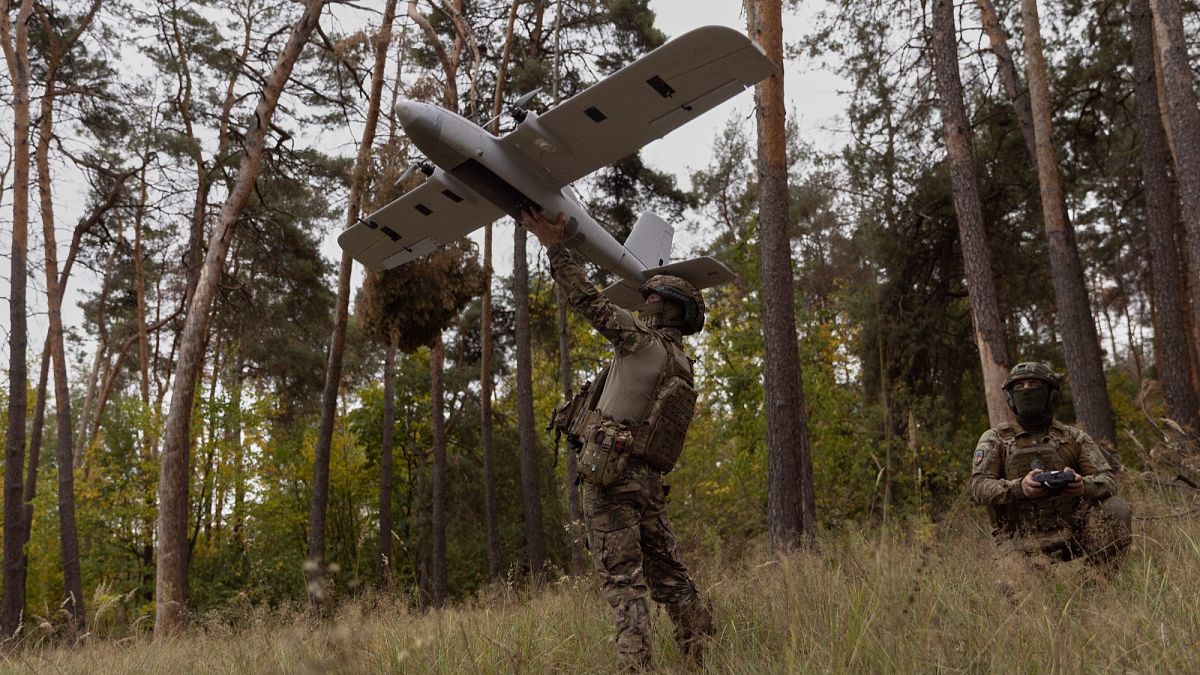
Serdiuk’s company, MOWA Defence, employs Ukrainian veterans and has worked with NATO forces in joint exercises. Their argument centres on a key lesson from Ukraine’s war against Russia: building hardware alone is insufficient. “First the conversation should be about humans and skills and second about equipment,” he said.
Indeed, the conflict in Ukraine has underscored that the human element remains critical in drone warfare. Russia reportedly mounted around 5,600 drone attacks in September alone, and Ukraine has surged its own production in recent years. Yet despite the spike in production, Ukraine’s success has hinged less on pure quantity and more on adaptability, tactics and what Serdiuk calls “flexible thinking” in unmanned systems deployment.
From the European perspective, the implications are profound. The EU’s recently unveiled “drone wall” initiative and the EDA’s drone strategy reflect a drive to strengthen military-industrial autonomy. If Europe delivers large numbers of drones without corresponding investments in training, skills and operational doctrine, it risks becoming heavy on kit but light on effect.
Training for drone operations is not merely about technical piloting skills. It involves embedding unmanned systems into broader military tactics, developing doctrine, upgrading command structures and forging interoperability with existing Euro-Atlantic assets. Serdiuk’s insight—that a drone factory alone may be vulnerable to disruption—captures the strategic dimension: adversaries can attack production lines, whereas skilled operators offer resilience and adaptability.
Moreover, for the North Atlantic Treaty Organization (NATO) and European members coordinating defence initiatives, the balance between equipment and personnel matters. If European armies adopt unmanned systems en masse without training infrastructure, they risk replicating a model where high-volume kit outpaces meaningfully trained users. Serdiuk warns this can breed “a million drones being produced” but “a hundred people capable of using drones.”
In Brussels, the debate appears to be shifting. Draft conclusions for a forthcoming EU summit highlight the need for joint efforts to “enhance anti-drone and defence capabilities, in a coordinated manner”. The Commission’s move to provide a €2 billion package for Ukraine’s drone defence has also been framed as benefiting EU technological development as well as Kyiv’s battlefield efforts.
From a policy perspective the call is clear: Europe must not treat drone procurement as a fast-track to autonomy. Production and industrial capacity matter, but they are only one half of the equation. The other half is building human capital, establishing robust training pipelines and embedding unmanned systems into tactical doctrine.
As unmanned systems proliferate across European defence frameworks, the strategic lesson is that superiority will not lie in the number of platforms, but in the proficiency of those who operate them. For Europe and NATO the future may not be about manufacturing the most drones, but about fielding the most effective drone forces.
Summary
A Ukrainian expert emphasizes the need for the EU to focus on building training centers for drone operators rather than solely concentrating on drone production. This approach aims to enhance adaptability to rapid battlefield changes and improve operational effectiveness.