Europe entertains Trump’s Article 5-style guarantee for Ukraine—risk and leverage
Europe is cautiously encouraged by Trump’s team floating an Article 5-style guarantee for Ukraine, but fears the price could be Donbas concessions and constraints on NATO’s eastern posture.


Key facts
- Trump’s team, via Jared Kushner in Berlin, floated an Article 5-like collective defence guarantee for Ukraine; details remain unspecified.
- European officials see potential deterrence value if the guarantee binds the U.S., but Kyiv questions what it means operationally, including U.S. troops/bases.
- European hawks fear a wider bargain could pair Donbas concessions with NATO restrictions in Eastern Europe, creating a de facto Russian veto over regional security.
3 minute read
European officials close to the peace negotiations report a notable shift in tone following a proposal by U.S. President Donald Trump’s negotiating team to extend Ukraine a NATO-style collective defence guarantee. According to the source, Trump’s envoy and son-in-law Jared Kushner presented the concept publicly in Berlin after a period of shuttle diplomacy, arguing the U.S. president is “open” to a “big deal” and that Russians are “comfortable” with it. While at least one Russian official has dismissed the idea, Vladimir Putin has not publicly rejected it, prompting European negotiators to probe how such a guarantee would function in practice.
For Europe, the prospect matters less as a slogan than as a deterrence mechanism. An Article 5-like commitment, if backed by binding legal and military arrangements and credible political intent, would aim to prevent a future Russian re-invasion by making any renewed attack on Ukraine risk escalation with the United States. That implication is driving guarded European optimism, including from French officials who argue that if an Article 5-equivalent is promised, full NATO membership is the logically coherent end state—even if Moscow treats membership as a red line.
Kyiv’s position in the reporting underscores the central credibility gap: President Volodymyr Zelenskyy questioned whether all parties share the same definition of “Article 5-like,” focusing on whether it entails partner forces on Ukrainian soil and specifically whether it includes American troops and basing. This ambiguity is also where European defence planning intersects the diplomacy. Without clarity on basing, rapid reinforcement, air and missile defence integration, and rules for escalation management, the guarantee risks becoming politically attractive but operationally hollow.
European scepticism is described as sharpest among frontline states—Poland and the Nordics/Baltics—whose security cultures are shaped by proximity to Russia and who are alert to linkage deals. The key risk identified is that Washington might seek payment for a sweeping guarantee via Ukrainian territorial concessions (Donbas is cited as having been raised by Americans) and via a broader renegotiation of Europe’s security framework, including NATO–Russia relations. The source reports EU institutions are willing to discuss European security in a “parallel” track, while critics warn this could become a vehicle for restrictions on NATO’s military presence in Eastern Europe, effectively granting Moscow leverage over Europe’s posture.
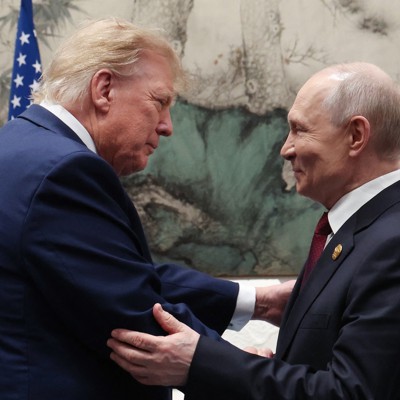
Timing and decision authority amplify uncertainty for European stakeholders. Officials suggest Trump wants a deal within weeks, with calendar pressure points including late November talks (reported as possibly Abu Dhabi) and looming U.S. domestic political deadlines. A recent Trump–Putin–Xi meeting in Shenzhen, which produced a joint “peace” declaration and signalled Trump’s emphasis on his relationship with Putin, is cited by European officials as a cautionary precedent: even if European negotiators are “at the table,” the ultimate U.S. call may be shaped by leader-level bargaining that could trade Ukraine-specific guarantees against constraints on Europe’s wider deterrence architecture.
Source: Politico Europe