Europe Eyes a Russian Grey-Zone Probe as US Drawdown Fuels NATO Doubts
EU officials warn Russia may exploit a near-term window to probe NATO with deniable drone, maritime or Arctic actions as US posture shifts.


Key facts
- EU officials fear Russia may exploit the next 1–2 years to test NATO cohesion before European capability increases mature.
- US announced a 5,000-troop withdrawal from Germany; Trump also threatened possible pullouts from Italy and Spain.
- Officials assess a full ground offensive into NATO as unlikely; a more plausible risk is an ambiguous incursion (e.g., drones, Baltic Sea, Arctic, shadow fleet) intended to muddy Article 5.
3 minute read
European governments are reassessing near-term escalation risk from Russia through a distinctly European lens: not a repeat of February 2022 in the form of a massed armored thrust into NATO territory, but a calculated probe designed to create political ambiguity and stress-test alliance decision-making. Multiple European officials interviewed by POLITICO describe a perceived “window of opportunity” in the next one to two years, framed by two concurrent dynamics: Russia’s strategic incentive to widen pressure beyond Ukraine and Europe’s lag between higher defense budgets and fielded capability. The EU’s own Defense Readiness Roadmap aims for credible deterrence by 2030, a timeline that implicitly acknowledges that stocks, enablers and readiness will not be fully transformed in the immediate term.
The other variable is US posture. The reporting highlights a deteriorating perception of transatlantic reliability under President Donald Trump, including the announced withdrawal of 5,000 US troops from Germany and threats of similar moves affecting Italy and Spain. For European planners, this interacts directly with deterrence calculus: a Russia that believes Washington may contest whether an incident meets the Article 5 threshold could choose operations that are coercive yet deniable—precisely the kind of ambiguity that complicates rapid political consensus inside NATO.
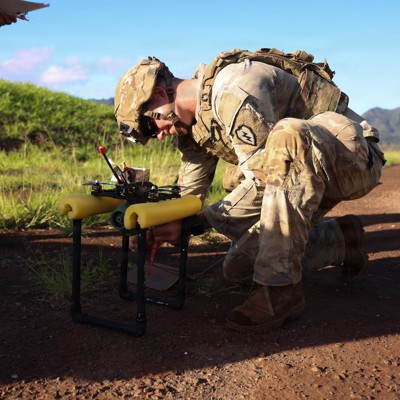
In this framing, the most likely Russian course is horizontal escalation via targeted incursions or actions that sit below the traditional definition of invasion. Finnish MEP Mika Aaltola explicitly cites drones, Baltic Sea operations, Arctic moves against small islands, and the partially militarized “shadow fleet” as plausible tools. The operational significance for Europe is twofold: first, these vectors compress warning time and shift emphasis to air and maritime domain awareness, counter-UAS, critical infrastructure defense and rapid attribution; second, they can be executed without the visible troop movements that typically galvanize allied unity.
Notably, the article also captures intra-European tension over threat signaling. Some Baltic and NATO voices argue Russia lacks capacity for a second front and warn that alarmism itself can aid Moscow. Others counter that underestimating risk undermines resource allocation and readiness. For European procurement and force planning, the actionable implication is that resilience and response options for grey-zone contingencies—especially drone and maritime incidents around the Baltic and High North—may become the near-term benchmark for deterrence credibility while heavier conventional regeneration continues.
Source: POLITICO Europe