European ATM Master Plan for Sustainable Airspace Collaboration
The European ATM Master Plan aims to enhance collaboration among stakeholders to create a more efficient and environmentally sustainable airspace. This initiative addresses the challenges of air traffic management while promoting eco-friendly practices.


Key facts
- Focus on environmentally friendly air traffic management.
- Promotes collaboration among various stakeholders.
- Integrates advanced technologies for efficiency.
2 minute read
The European ATM Master Plan recasts air traffic management as a single operating model for Europe, converting fragmented national systems into a coordinated, data driven network. By tying the Single European Sky agenda to SESAR deployment and industry investment cycles, it sets measurable targets for capacity, predictability and emissions. The emphasis is on implementation discipline, using common architectures and performance frameworks to translate policy into deployable capabilities that deliver near term environmental gains and lower unit costs.
Operationally, the plan backs trajectory based operations, free route airspace, dynamic sectorisation and digital towers, all underpinned by system wide information management. Together these tools shorten routings, improve network forecasting and enable collaborative decision making. Crucially, they lay a digital backbone that supports incremental automation and greater use of AI assisted services without ripping out legacy systems. CNS modernisation, spectrum efficiency and cyber by design are treated as core enablers so capacity growth does not erode resilience.
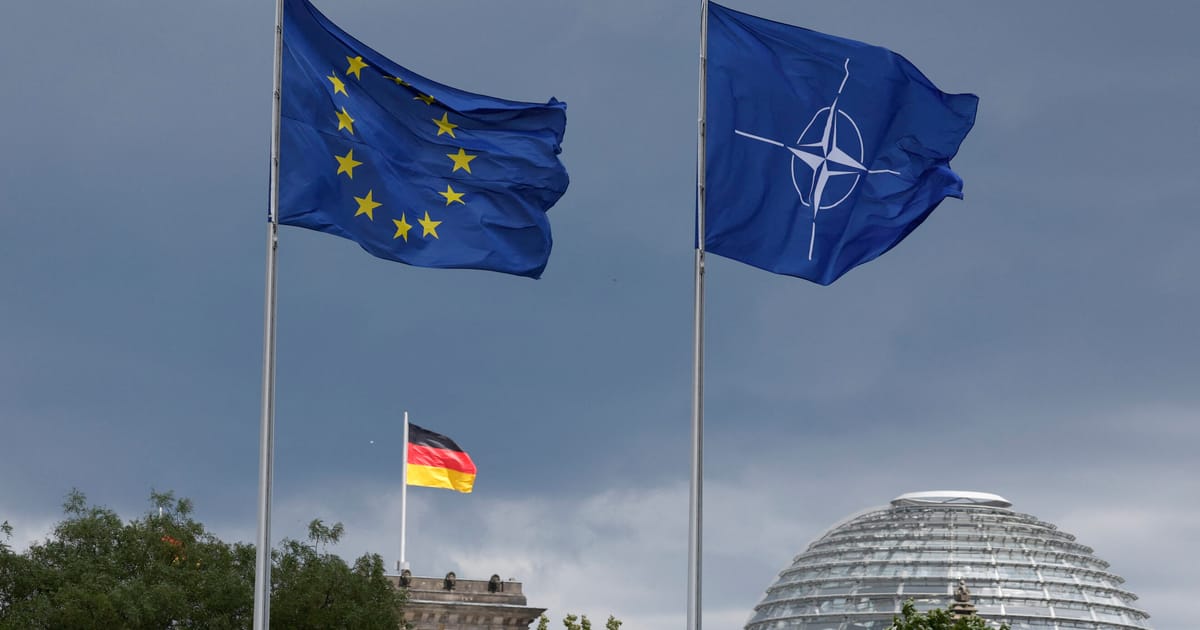
Civil military integration moves from aspiration to design principle. Flexible use of airspace, shared situational awareness and common data services are intended to make daily flows more efficient while preserving priority for state missions. For NATO members, interoperable ATM and predictable cross border procedures reduce friction for reinforcement, air policing and logistics, improving access to dual use airfields under stress. The roadmap embeds U space so drones and future eVTOL can operate safely alongside manned traffic with structured deconfliction that protects sensitive operations and critical infrastructure, aligned with the SORA 2.5 updates for drone operations.
The risks are political and technical. Uneven national uptake, legacy lock in, workforce shortages and cyber threats could stall benefits. The answer is EU level governance through SESAR, deployment incentives and harmonised standards, plus open architectures and shared services that smaller providers can adopt quickly, backed by rigorous safety and security assurance. If executed coherently, Europe gains a greener, more integrated and defence ready sky. Digital ATM will harden Europe’s deterrence and speed of manoeuvre.
You might also be curious about...
 Mr. T (Curator)
 Mr. T (Curator)
 Mr. T (Curator)