European Commission Launches New EDF Grant Agreements for Defence R&D
The European Commission has initiated a series of grant agreements under the European Defence Fund, awarding funding to 62 collaborative R&D projects aimed at enhancing Defence Readiness by 2030. This initiative underscores the EU's commitment to strengthening its defense capabilities.


Key facts
- 62 collaborative R&D projects funded under the European Defence Fund.
- New grant agreements signed to enhance Defence Readiness by 2030.
- Focus on innovation and collaboration among European defense industries.
2 minute read
The signing of the new European Defence Fund (EDF) grant agreements marks a quiet but decisive industrial revolution for the continent’s security architecture. No longer is EU defense R&D merely a collection of siloed national science projects; with nearly €1 billion allocated to 62 collaborative consortia, it has become a coordinated pipeline explicitly tied to the "Defence Readiness 2030" agenda. The Commission’s strategy is clear: by locking in cross-border partnerships and shared roadmaps at the research stage, Brussels is forcing interoperability by design rather than by retrofit.
This framework represents a behavioral shift as much as a financial one. Projects like GARUDA (next-generation air combat) and BEAST (missile defense) are not just about developing hardware; they are engines for standardization. By incentivizing primes to adopt open architectures and modular software early, the EDF is nudging the industry away from the vendor lock-in that has plagued European procurement for decades. The goal is a future where payloads are plug-and-play, logistics are shared, and upgrades happen at the speed of software rather than the speed of steel. For small and medium-sized enterprises (SMEs), which make up a significant portion of the 600+ participating entities, this structure offers something rare: predictable demand and a clear pathway to testing and certification across national borders.
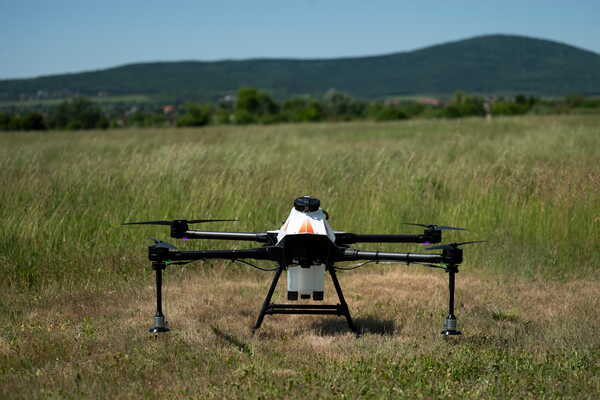
For NATO, the value is intensely practical. The alliance has long struggled with the "valley of death" between promising demonstrators and fieldable capabilities. By focusing on critical gaps, air and missile defense, uncrewed systems, and cyber resilience, the EDF is effectively pre-validating technologies that will eventually plug into allied command-and-control networks. The emphasis on projects like VANTAGE (tactical UAS with kinetic capability) and Small UAS reflects a direct absorption of lessons from Ukraine: the future of deterrence relies on affordable, attritable systems that can be produced at scale and iterated rapidly.
However, the true strategic test lies in execution. Funding agreements are signatures on paper; the challenge now is to push these demonstrators into production on timelines dictated by a deteriorating security environment. Member states must align their requirements to co-finance the transition from prototype to inventory, avoiding the bureaucratic inertia that often stifles innovation. If governance holds, this initiative can convert European ingenuity into credible mass and readiness. The continent is moving toward a faster, more integrated defense model where advantage is defined not just by industrial depth, but by the speed at which software and sensors can be unified against a common threat.