Exploring Bulgaria's Kamikaze Drone Manufacturing
Bulgaria has emerged as a significant player in the production of kamikaze drones, reflecting a growing trend in military technology. This article delves into the operations of a Bulgarian factory specializing in these unmanned aerial vehicles, highlighting the implications for regional security.

Key facts
- Bulgaria is increasing its production of kamikaze drones for military applications.
- The factory focuses on unmanned aerial systems (UAS) designed for precision strikes.
- Bulgaria's drone capabilities may enhance its defense collaboration within NATO.
4 minute read
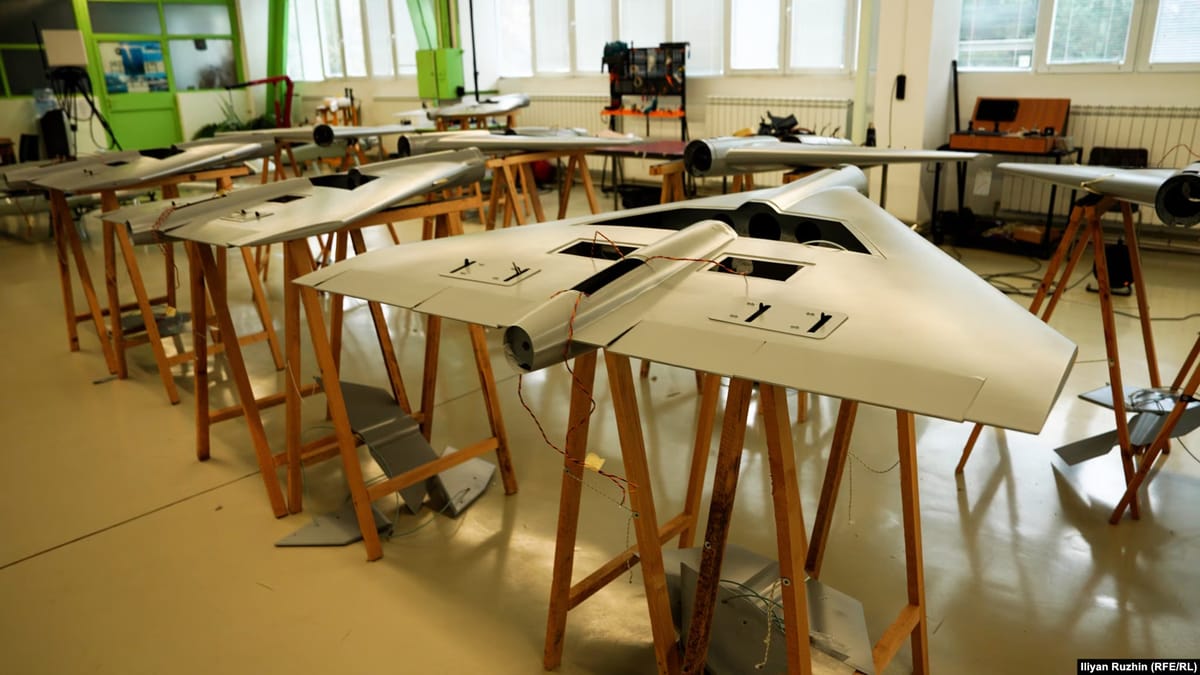
In a quiet industrial corner outside Sofia, a Bulgarian factory once known for building electronics for the national military has quietly pivoted into the business of modern conflict, producing small, low cost kamikaze drones that speak to a new reality in European warfare. The company, which for decades supplied navigation and radio equipment, now turns out a flying wing type drone powered by an electric motor, a design choice that cuts noise and simplifies logistics. It is not a long range strategic weapon. Its operating radius measured in tens of kilometres, its warhead modest, and its appeal lies in a different calculation: speed of production, low unit cost, and suitability for tactical targeting where numbers and ubiquity matter more than single, decisive reach.
The plant’s managers describe a process that looks industrial rather than artisanal, assembly lines where frames, motors, guidance units and warheads are fitted in a matter of days, and a monthly output that can be scaled. Such capacity matters in an era when battlefield geometry is changing. High end missiles remain central to deterrence and strategic strike, yet conflicts in Ukraine and elsewhere have exposed how attritable, mass produced systems can impose constant pressure on an opponent’s air defenses and logistics, forcing expensive interceptors to be used against comparatively cheap expendable vehicles. The Bulgarian product sits inside that tactical niche, the kind of kit that complicates defense planning without promising strategic breakthroughs. This cost pressure is already reshaping countermeasures, including Europe’s push for affordable anti-drone rockets.
Beyond technical specifications, the story is political. The company has marketed jamming equipment and counter-drone systems abroad and says it can match the performance of Western equivalents at a lower price, yet finds its path to European buyers blocked by procurement politics and protection of domestic suppliers. That friction highlights a recurring dilemma for smaller producers: capability alone is rarely sufficient to unlock institutional contracts. Trust, alliance relationships, certification regimes and long procurement cycles shape who supplies whom. For buyers outside those established chains, the lower price and availability of new entrants are attractive. That dynamic helps explain why buyers from a range of countries, including some outside NATO, show interest in affordable, pragmatic systems even as formal alliance customers remain elusive. These barriers sit squarely in the debate behind the EU’s joint procurement drive under EDIP.
The implications reach beyond a single factory. If smaller manufacturers across Europe or its periphery can field credible tactical drones and support systems, the center of gravity in some parts of the defence industrial base may shift. National militaries will have to weigh whether to integrate such platforms into doctrine and logistics, to accept shorter lifecycles and more disposable ordnance, and to adapt air defense architectures accordingly. At the same time, proliferation risks multiply. Exporting affordable strike drones to states with active conflicts or fragile oversight regimes risks widening the set of actors able to conduct asymmetrical strikes, heightening regional tensions and complicating arms control efforts.
Some questions remain unresolved. Public accounts of production rates and capacity are based on company statements and have only limited independent verification. How these systems perform under sustained contested conditions, against modern air defenses and electronic warfare, is not yet well documented. Supply chain vulnerability is another concern. Many components remain globally sourced, and sanctions, export controls or disruptions could quickly constrain output. Finally, the ease of manufacture and the availability of dual use components raise thorny export control and ethical questions about where responsibility lies when commercially produced systems are repurposed for offensive use.
What is clear is that the emergence of small kamikaze drones from unexpected places alters the calculus of modern conflict. They do not replace heavy strike systems, but they redefine what is militarily feasible at tactical depth. For nations and alliances trying to adapt, the choices are political as much as technical: whether to build procurement channels that can harness nimble domestic suppliers, whether to tighten controls on components and exports, and how to invest in layered defenses that can meet both high end and low cost attritable threats. The factory outside Sofia is a microcosm of those tensions, a place where entrepreneurship, national industrial policy, and the changing face of war intersect in ways that are likely to be felt beyond Bulgaria’s borders.
Source: Radio Free Europe/Radio Liberty
You might be interested in...
 Mr. T (Curator)
 Mr. T (Curator)
 Mr. T (Curator)