FireDrone Secures €161K for Innovative Heat-Resistant Drones
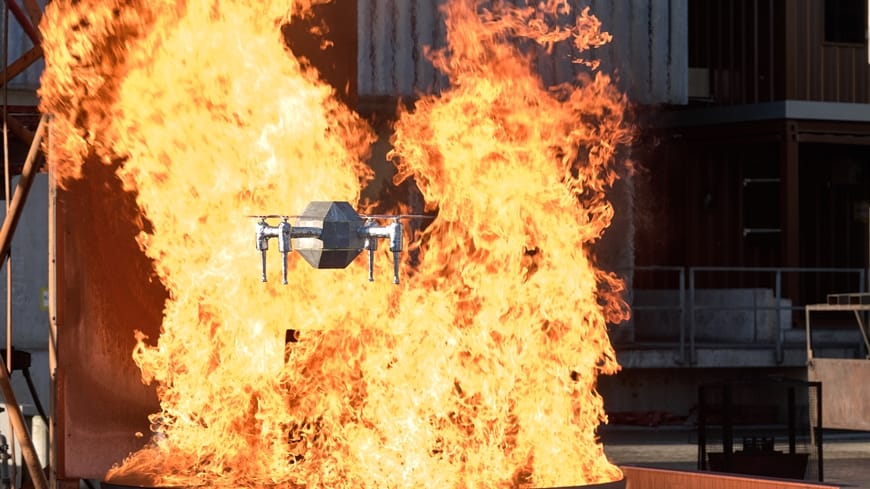
FireDrone has received €161,000 from Venture Kick to develop heat-resistant drones, enhancing their operational capabilities in extreme environments. This funding will support the company in advancing its technology, potentially benefiting various sectors including defense and emergency response.

Key facts
- FireDrone received €161,000 from Venture Kick for heat-resistant drone development.
- The funding aims to enhance drone performance in extreme temperatures.
- Applications include defense, search and rescue, and emergency response.
2 minute read
FireDrone’s funding from Venture Kick reflects a targeted bet on thermal survivability for small unmanned systems, a niche with outsized operational value for Europe and NATO. Heat resistant airframes, sensors and powertrains can operate where conventional drones fail, near industrial fires, munition stockpile incidents, critical energy sites, or Mediterranean wildfires. That capability expands commanders’ options for rapid damage assessment, perimeter mapping, payload drop, and overwatch while reducing risk to first responders and engineers. It also supports military tasks such as battle damage assessment, route clearance and EOD support in post strike or degraded urban environments where flashover and residual heat disable standard platforms. Strategically, the project aligns with EU priorities to strengthen dual use technologies and resilience. It offers procurement pathways that span civil protection and defence, improving volume economics for a European supplier. To translate R&D into fielded capability, FireDrone will need to demonstrate repeatable performance under heat soak, robust thermal shielding for batteries and avionics, and reliable autonomy when GNSS or data links degrade around infrastructure. Interoperability with NATO standards for UAS control, secure datalinks and open payload interfaces will be vital, as will compliance with SORA based risk assessments for BVLOS in abnormal environments. Industrial execution matters. European sourcing of high temperature materials and coatings, cybersecurity hardening, and integration with common C2 stacks can differentiate the platform and avoid export friction. Early trials with fire brigades, gendarmerie units and energy operators would validate use cases and accelerate certification. If successful, heat tolerant sUAS can become essential kit for both municipal responders and combat support units, closing a critical gap in persistent sensing and rapid response. This is another step in Europe’s shift toward rugged, attritable drones designed for contested and climate stressed operations.
You might also like to read…
 Mr. T (Curator)
 Mr. T (Curator)
 Mr. T (Curator)