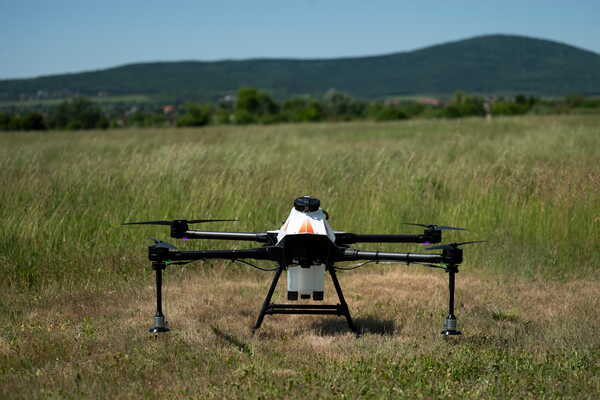
Fotokite's Impact on Private Security in Europe
Fotokite drones enhance security in Europe by providing real-time data for crowd management, infrastructure monitoring, and construction site oversight. Their tethered design facilitates long-duration flights, making them invaluable for various security applications.

Key facts
- Fotokite drones enable long-duration flights for continuous monitoring.
- They are used for crowd management at large events across Europe.
- The technology enhances safety at critical infrastructure sites.
2 minute read
Fotokite’s tethered drones are reshaping private security operations in Europe, providing persistent overwatch that complements ground teams and fixed CCTV. Continuous power through the tether and integrated thermal and visual sensors give control rooms a stable top down view, which improves decision making in dynamic, high density environments. Operationally, the appeal is risk and compliance. Tethered flight creates a defined airspace footprint, reduces overflight of uninvolved people and simplifies safety cases for deployments around stadiums and city centres under EU UAS rules. For operators governed by strict duty of care and incident reporting, a predictable aerial asset supports standard operating procedures, repeatable checklists and auditable responses. For critical infrastructure, from energy hubs to transport nodes, persistent elevation aids perimeter integrity and early anomaly detection, which aligns with European resilience objectives and the tightening obligations under NIS2 and critical entities legislation. The physical tether assures endurance and predictable behavior, factors valued by facility owners who must maintain operations during disruptions, including GNSS degradation and electromagnetic interference. Integration is the strategic lever. These systems plug into existing video management and incident management platforms, enabling shared feeds between private security, police and civil protection when needed. That creates a common operating picture for crowd management, evacuation planning and post event forensics at a fraction of the cost and complexity of crewed aviation. For NATO countries, such low risk, on demand ISR at the edge dovetails with doctrine that prioritizes resilient sensors, faster loops and civil military interoperability. As Europe invests in U space services, counter UAS defenses and critical infrastructure protection, tethered ISR will move from niche to standard.