France moves to bypass peacetime rules under new ‘security alert’ status
France is proposing a “national security state of alert” to suspend selected rules for faster mobility and procurement, alongside €8.5bn more for munitions and a France Munitions bulk-buy SPV.


Key facts
- France proposes a “national security state of alert” allowing temporary derogations from selected regulations to speed mobility, procurement and production.
- The alert status could be activated without prior parliamentary approval; it will be embedded in an updated Military Planning Law (Council of Ministers 8 April; Assembly from 5 May; Senate from 1 June).
- Lecornu announced €8.5bn additional munitions funding (2026–2030), creation of “France Munitions” bulk-purchase SPV, and a €300m fund to pull civilian industry into defence.
3 minute read
France’s executive is seeking a new legal instrument—the “national security state of alert”—designed to temporarily suspend or adapt parts of the regulatory framework in order to accelerate defence-related activity when the country faces an undefined “threat.” Prime Minister Sébastien Lecornu framed the initiative as recalibrating a state built for peacetime to a security environment “no longer entirely at peace,” arguing it is intended to preserve effectiveness in crisis rather than weaken the rule of law. The mechanism is notable because it could be activated without parliamentary approval, extending a French pattern of emergency regimes previously used for counterterrorism (post-2015) and public health (Covid-19), but now explicitly oriented toward defence industrial mobilisation and military logistics.
The proposed status would allow the government to pause application of regulations affecting construction, heavy truck traffic, public procurement, and storage of ammunition and fuel. In operational terms, this is aimed at removing friction from military mobility, speeding weapons purchases, and enabling faster scale-up of production. Lecornu indicated that associated measures would cover counter-drone policy and the management of strategic stockpiles and reserves, suggesting a broader attempt to make surge capacity and domestic readiness an administrative default rather than an ad hoc exception.
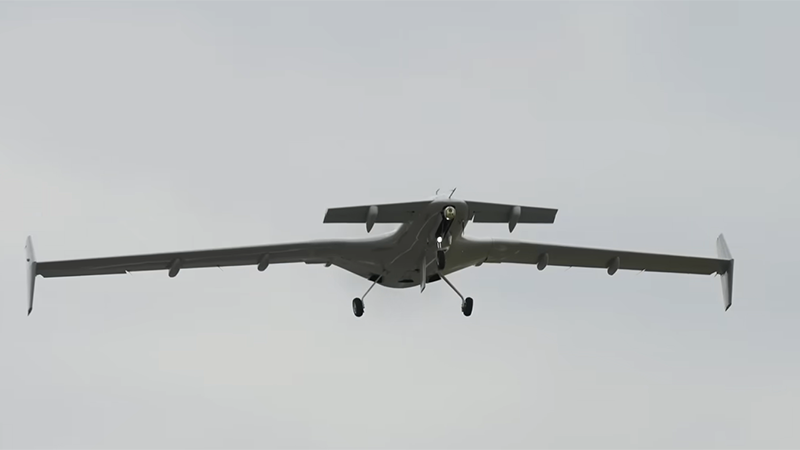
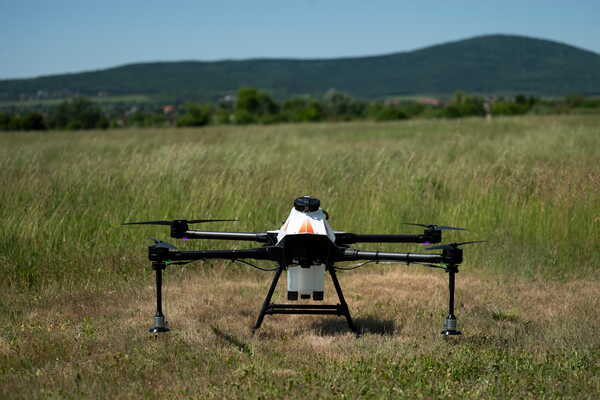
Industrial policy is being paired with a sizeable munitions push. Lecornu said France will earmark an additional €8.5 billion for munitions procurement between 2026 and 2030, on top of €16 billion in the 2023 Military Planning Law. He also announced “France Munitions,” a special purpose vehicle intended to buy shells and missiles in bulk for French forces as well as allies and export customers, financed by state and private capital. The stated priorities include air defence and early warning, plus interceptor and kamikaze drones, with an emphasis on mass, rapid and low-cost production—an implicit acknowledgement that high-end missile intercepts are economically unfavourable against cheap one-way attack drones.
For Europe, France’s move matters beyond national constitutional politics. If implemented, it could become a template for accelerating procurement and logistics through regulatory derogations—issues that also constrain EU/NATO reinforcement, cross-border military mobility, and munition replenishment. The French bulk-buy vehicle could either complement EU-level joint procurement initiatives or compete with them, depending on governance, access for partners, and export-client prioritisation. Lecornu’s references to countering cheap drones—citing France’s experience against Iranian Shahed systems in the Middle East—also reinforces the emerging European requirement for affordable layered air defence, including mass-produced interceptor drones, rather than relying solely on scarce and costly missile inventories.
Source: POLITICO Europe