France’s ‘war economy’ stalls as Paris and industry trade blame
France’s “war economy” push is stalling amid a contract-versus-investment dispute with industry, as air-defence missile stocks tighten and Europe-wide supply chains feel the effects.


Key facts
- POLITICO reports a stand-off between the French state and defence firms over who should take investment risk: Paris wants industry to invest ahead of orders; firms want binding contracts first.
- France is described as facing tightening air-defence/air-to-air missile stocks, including MICA, after intercept operations in the Middle East, while also facing pressure to supply Ukraine.
- France’s 2024–2030 Military Planning Law totals €413bn (incl. €16bn for munitions) and is set to be revised to add €36bn; officials say orders exist, lawmakers/industry dispute the visibility and scale.
3 minute read
POLITICO depicts France’s “war economy” pivot as having produced more political signalling than sustained industrial acceleration, with the state and defense companies blaming each other for why mass production has not materialised at the scale implied by the post-2022 security environment. President Emmanuel Macron is pressing industry to “take more risks” by investing ahead of orders, while manufacturers argue that without iron-clad contracts they cannot justify building new capacity that the state may ultimately not utilise. French senator Cédric Perrin, who chairs the senate’s defense and foreign affairs committee, is quoted arguing that many government announcements amount to accelerated delivery of existing orders rather than genuinely new procurement that would underwrite a step-change in output.
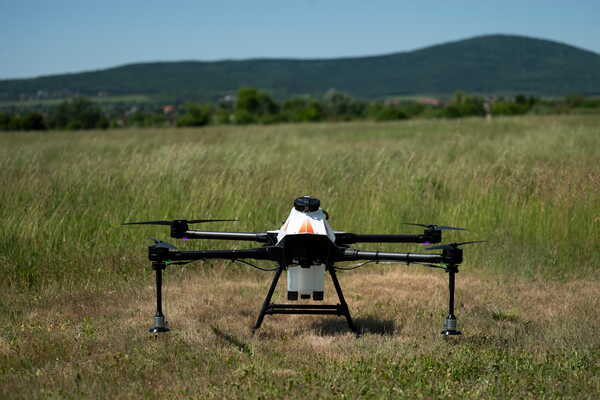
The operational risk is framed through air defence. France is described as scrambling to replenish expensive, long-lead interceptors expended in the Middle East against Iranian drones and missiles; POLITICO cites a warning that stocks of MICA air-to-air missiles are running low and notes Paris is exploring low-cost interceptor drones from startups including Harmattan AI and Alta Arès. This highlights an emerging European pattern: high-end missile inventories are finite, replenishment cycles are slow, and layered defence is increasingly pushing interest in cheaper counter-UAS interceptors to preserve premium rounds.
Paris intends to revise the 2024–2030 Military Planning Law, originally set at €413 billion (including €16 billion for munitions), to add €36 billion despite high deficits, and Defence Minister Sébastien Lecornu is expected to convene meetings to ensure industry can absorb new orders. Yet the article stresses that confidence and incentives remain misaligned. Procurement chief Patrick Pailloux rejects claims of insufficient visibility, while industry voices characterise the state as an unreliable customer. Compounding this is France’s limited leverage: officials are quoted noting that many suppliers are effectively monopolies and France tends to buy domestically, reducing credible “switch supplier” pressure.
For Europe’s defence officials and procurement planners, the French case is not a parochial dispute. MBDA missile production, Franco-German KNDS land systems output, and French demand signals influence multinational supply chains and joint procurement (including for Aster and Mistral). If France delays placing large, funded orders, European stockpile regeneration and surge-capacity planning can be distorted—particularly in air defence, where demand is pan-European and lead times are long. POLITICO also notes unflattering comparisons with Germany and Poland, reinforcing the risk that France’s rearmament pace could lag peers, constraining Europe’s collective ability to sustain high-intensity operations and replenish inventories while supporting Ukraine.
Source: POLITICO.eu