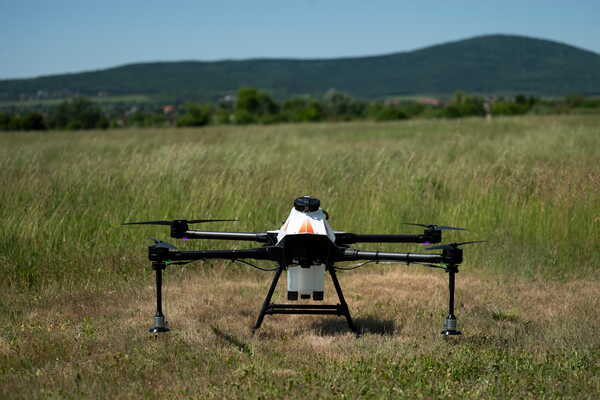
French Paratroopers Demonstrate PROTEUS Anti-Drone System
The French Army's 35th Parachute Artillery Regiment successfully conducted its first live-fire demonstration of the PROTEUS counter-drone system on October 18 at the Canjuers training area. This marks a significant milestone as they become the first unit to utilize the latest Standard 1 version of t


Key facts
- First live-fire demonstration of PROTEUS system by French paratroopers.
- Conducted on October 18 at Canjuers training area.
- 35th Parachute Artillery Regiment is the first to receive the latest Standard 1 version.
- PROTEUS is designed to counter drone threats effectively.
Summary
The French Army's first live fire of the PROTEUS counter-drone system by the 35th Parachute Artillery Regiment is more than a technical milestone, it signals a shift from trials to unit-level adoption of layered counter-UAS. Equipping a parachute artillery regiment with the Standard 1 configuration reflects a doctrinal change, organic protection against small drones is becoming a baseline requirement for maneuver and fires units, not a niche capability. This aligns with NATO lessons from Ukraine, where low cost quadcopters and FPV munitions have reshaped reconnaissance and strike, and where short range air defense remains a persistent gap.
Operationally, France is moving to integrate counter-UAS within a broader air defense ecosystem that blends sensors, electronic attack and kinetic defeat. The priority is to protect columns, assembly areas and logistics nodes as well as fixed sites, and to preserve tempo under constant aerial surveillance. Effectiveness will hinge on tight command-and-control integration, clear rules of engagement, and reliable deconfliction with friendly drones in contested and congested airspace.
Industrial and policy factors are central. Accelerating a domestically sourced system strengthens the European defense industrial base, creates headroom for rapid spiral upgrades, and supports interoperability across allies. Coordinating with EU initiatives that promote joint procurement and common standards can compress timelines, lower sustainment costs and improve supply resilience, while reducing dependence on non-European vendors.
The demonstration does not close every gap. Cost per intercept, electronic warfare saturation, and the need for 24/7 coverage across dispersed fronts argue for a layered mix of soft-kill and hard-kill options, intensive training and disciplined electromagnetic management. For NATO ground forces, the takeaway is clear, counter-UAS must be modular, widely distributed and fused with existing air defense rather than treated as a boutique add-on. Europe is moving toward denser, smarter counter-drone layers as warfare evolves.