German public warms to lethal autonomy as Berlin shifts stance
A POLITICO/Public First poll finds one-third of Germans back AI lethal decisions, widening Europe’s autonomy debate as Berlin’s stance loosens.


Key facts
- POLITICO/Public First poll: one-third of Germans support AI making battlefield life-or-death decisions, even if less transparent.
- 47% of German respondents still prefer human involvement; Germany is less human-preferential than the UK, US, Canada and France.
- 46% of Germans say cyber and AI matter as much as traditional military power; EU AI Act does not cover military uses.
3 minute read
Polling commissioned by POLITICO and conducted by Public First suggests Germany’s public is becoming materially more accepting of lethal autonomous weapons systems (LAWS) than in previous years and, in comparative terms, more permissive than several key allies. One-third of German respondents said they favor AI systems being used in weapons in place of human decision makers, even where these systems are less transparent. A further 47 percent preferred human involvement even if it slows decision-making, implying a public split between speed and accountability that is sharper in Germany than in the UK, US, Canada and France, where 26 percent support militaries relying on AI rather than humans.
For European defence officials and industry, the immediate implication is political space—though not consensus—for faster adoption of autonomy-enabled capabilities, particularly in air and loitering-munition segments where algorithmic target recognition and navigation already sit close to the “human-in-the-loop” boundary. The data also indicates a reframing of what constitutes decisive military power: 46 percent of German respondents said cybersecurity and AI mattered as much as traditional military power to win wars, supporting procurement narratives that prioritise software-defined capabilities, data pipelines, EW resilience and rapid iteration cycles over platform-centric approaches.
The results land alongside a reported shift in Berlin’s formal positioning: the governing coalition under Chancellor Friedrich Merz no longer explicitly excludes lethal decisions without human control in its coalition agreement, unlike the previous centre-left coalition. This matters for Europe because Germany’s procurement gravity and regulatory signalling can shape de facto standards across EU/NATO programmes, even though the EU AI Act (in force since 2024) does not apply to military applications. In parallel, the absence of clear UN rules—despite longstanding opposition from UN Secretary General António Guterres—keeps legal and reputational risk management squarely with national governments and prime contractors.
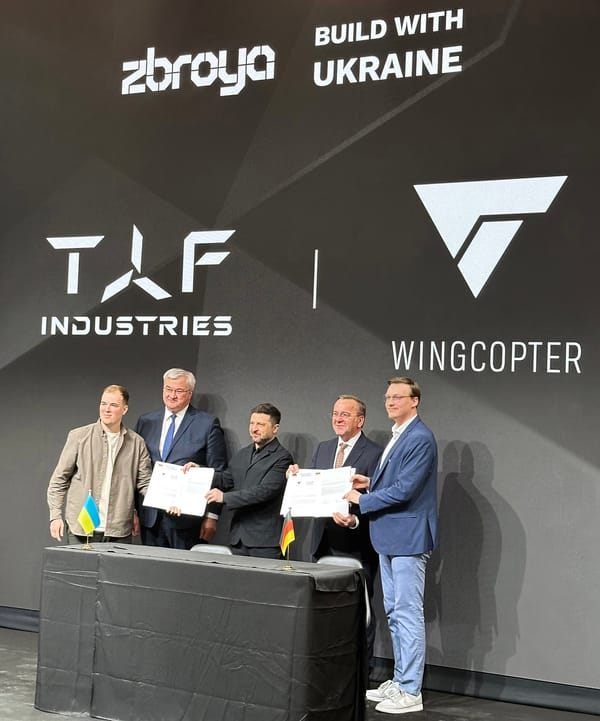
The poll also interacts with operational lessons from Ukraine, where drones and AI-enabled functions are reshaping kill chains and force protection. Germany is preparing to spend €267.7 million on a drone system from Helsing, but POLITICO notes Ukrainian field data indicating performance below expectations, underscoring a procurement risk: political acceptance of autonomy does not automatically translate into battlefield-relevant capability without robust testing, data access, and iteration under contested EW conditions.
Source: POLITICO.eu