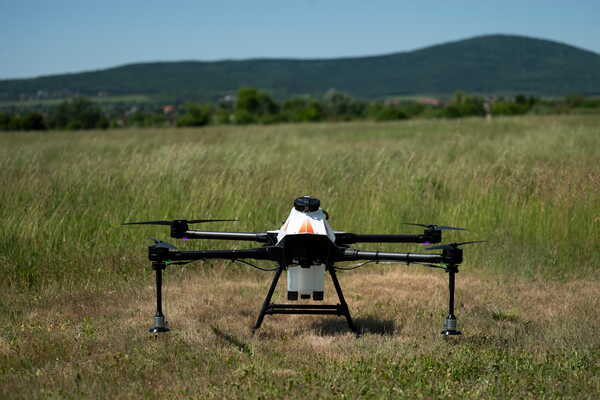
Germany tests faster, smarter interceptors for small-drone threats
Germany is testing faster, autonomous interceptors to defeat small drones and integrate them into national and allied air-defence networks.


Key facts
- Germany is trialling interceptors that prioritise speed, autonomy and advanced sensor fusion to defeat small drones.
- Experiments aim to integrate interceptors into layered counter-UAS approaches alongside jamming and C2 networks.
- Programme reflects lessons from recent conflicts and could shape NATO and EU procurement for scalable C-UAS capability.
2 minute read
Germany is experimenting with faster, smarter interceptors to respond to the rapid rise of small unmanned aerial systems. The effort focuses on higher interceptor speed and agility, improved onboard processing for classification and engagement, and tighter sensor fusion to reduce false positives. Trials are exploring semi-autonomous engagement chains that shorten the time between detection and neutralisation while retaining human oversight where required by rules of engagement.
These experiments are being positioned within a layered counter-UAS concept that combines detection (radar, RF and EO), electronic attack measures, and kinetic defeat options as complementary elements. The interceptor work aims to operate as a reliable kinetic backstop when non-kinetic measures are insufficient, and to integrate with existing command-and-control architectures for coordinated responses.
For European defence planners, Germany’s tests underline a pragmatic shift: move from sole reliance on jamming or point solutions toward interoperable, networked systems that can scale across national and coalition borders. Successful trials could influence NATO doctrine and steer EU procurement and funding toward more connectable, cost-effective counter-UAS tools. The programme also highlights industrial and policy priorities: balancing autonomy and human control, cutting per-engagement costs, and ensuring systems can be deployed to protect critical infrastructure and forces operating in complex, contested airspaces.
Source: NextGen Defense