How drones can scale reforestation of the world's major forests
Drone-based seeding and remote sensing can accelerate large-scale reforestation by improving access and monitoring, but long-term success requires appropriate species selection, follow-up care and local partnerships.

Key facts
- Drones combine fixed‑wing seeding, precision multirotor planting and remote sensing to accelerate restoration.
- Success hinges on seed provenance, post‑planting care and local partnerships, not just aerial delivery.
- EU actors can scale impact via funded pilots, monitoring standards and integration with local nurseries.
2 minute read
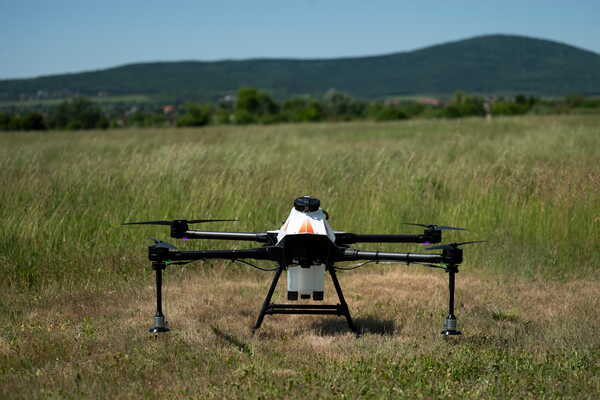
Drones are increasingly proposed as tools to restore the planet's largest forest systems. Contemporary approaches pair low-cost fixed‑wing UAVs for broad-area seed dispersal with multirotor platforms for targeted planting, and use LiDAR and multispectral sensors to map damage and measure recovery. The main operational strengths are speed, repeatability and access: drones can reach steep slopes, flooded terrain and remote patches that are costly or dangerous for ground crews, enabling rapid response after fires or illegal clearing. They also create data-rich monitoring cycles—AI and geospatial analytics can track germination and canopy recovery, helping allocate resources where survival rates are highest.
But technology is not a panacea. Ecological success depends on seed quality, genetic appropriateness, soil conditions and post‑planting care; without these, drone-seeding may produce low survival or lead to invasive-dominated regrowth. Social and governance issues matter equally: land tenure, community consent and integration with local nurseries and labour are essential. Regulatory questions—airspace rules, cross-border operations and export of biological material—also shape deployment.
For European actors, the priority should be integrating drone capability into broader restoration programs: co-finance pilots with local partners, fund long‑term monitoring and establish technical standards for species selection and outcome verification. When combined with sound ecological practice and community engagement, UAVs can help scale reforestation contributions to EU climate and biodiversity goals while avoiding common pitfalls of one‑size‑fits‑all technological fixes.
Source: DW