
Hungary’s ABZ Innovation Challenges Farm Drone Giants
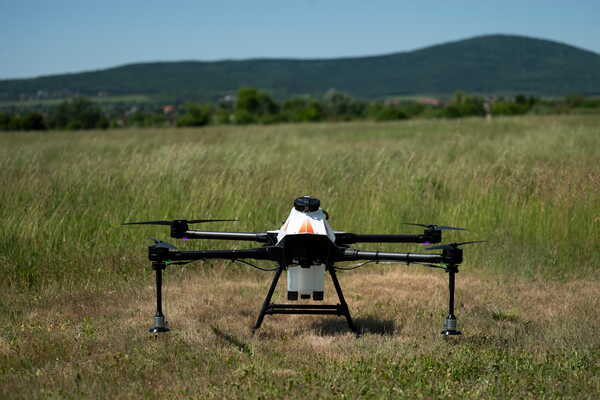
ABZ Innovation, a Hungarian drone start-up, reports an $8.2m raise to scale and compete with China-led heavy-duty ag/industrial drone makers.

Key Intelligence
- ABZ Innovation secured $8.2M to scale European heavy-lift UAS production.
- New Szentendre facility to produce 2,000 units annually starting June 2026.
- Company positions itself as the primary Western alternative to DJI and XAG dominance.
- Dual-use potential in 'action drones' for logistics and environmental interaction.
- Current market reach spans 28 countries with the U.S. as the primary export market.
3 minute read
The emergence of ABZ Innovation as a viable contender in the heavy-lift UAS sector signals a significant inflection point for European aerospace sovereignty. For years, the continent has remained over-reliant on Shenzhen-based giants for high-payload industrial and agricultural platforms. This dependency has created profound vulnerabilities, particularly as the lines between civil precision-spraying drones and tactical logistical assets continue to blur. ABZ’s move to scale production to 2,000 units per year suggests a maturation of the Hungarian defense-industrial base, transitioning from small-scale prototyping to industrial-grade manufacturing. The strategic value of this transition is amplified by the current 'uncomfortably long' waiting lists, indicating a domestic and international demand that outstrips the current Western supply of non-Chinese hardware.
Technologically, the L-series platforms represent a departure from the data-centric 'sensor-only' models that have defined many European startups. By focusing on 'action drones'—platforms designed for physical interaction such as spraying, spreading, and industrial cleaning—ABZ is tackling the high-torque, high-reliability engineering challenges where Chinese firms have traditionally held a near-monopoly. The operational efficiencies cited, including a 50% reduction in chemical use and a 90% reduction in water requirements, provide a compelling dual-use narrative that aligns with both the European Green Deal and the logistical requirements of modern theater sustainment. In a conflict-heavy global environment, the ability to deploy robust, high-payload UAS that are free from the 'phone-home' risks associated with Chinese software is becoming a non-negotiable requirement for Western procurement officers.
However, the scale of the challenge remains formidable. DJI’s global fleet of 400,000 agricultural units underscores a massive disparity in economies of scale and data-driven iteration. For European defense and industrial stakeholders, the rise of ABZ Innovation presents a choice: continue to rely on lower-cost, high-risk imports or provide the institutional and procurement support necessary to foster a homegrown alternative. The successful commissioning of the Szentendre plant in June 2026 will be a litmus test for Europe’s ability to repatriate manufacturing in the critical UAS sector. If ABZ can successfully bridge the gap between niche agricultural utility and broad industrial/defense application, it may serve as the blueprint for a broader European resurgence in heavy-lift unmanned aviation.
Source: DroneLife


