India pitches EU defense deals as Iran war and Russia frictions reshape ties
India is urging the EU to upgrade ties via a security-of-information pact enabling ammunition and drone/counter-drone cooperation, while Russia policy remains the core political constraint.


Key facts
- India’s foreign minister said New Delhi wants to “dramatically” deepen EU ties, including defense deals.
- India is seeking a security of information agreement with the EU to enable closer armaments cooperation.
- Jaishankar cited potential EU purchases of Indian ammunition and drone/counter-drone technology, while acknowledging Russia remains a political cloud.
3 minute read
India is positioning the European Union as a priority strategic partner and is explicitly inviting a step-change from trade into defense-industrial cooperation. In remarks to POLITICO during a Brussels visit, Foreign Minister Subrahmanyam Jaishankar framed EU‑India relations as approaching an inflection point, arguing that the recently signed trade agreement should be understood as a gateway to wider geopolitical and security alignment rather than a standalone commercial instrument.
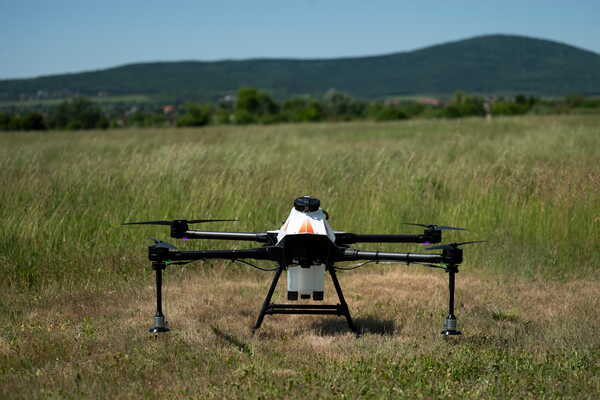
The practical enabler flagged by New Delhi is a security of information agreement, which Jaishankar suggested could pave the way for closer cooperation on armament deals. He went further by highlighting prospective EU procurement from India’s armaments industry, singling out ammunition and drone and counter-drone technology. For European procurement officials, this is a direct signal that India wants to be treated not only as a market and manufacturing base, but also as a potential supplier and co-development partner at a time when European stockpiles and industrial capacity remain under pressure.
The offer comes with strategic context. Jaishankar described the U.S.-Israeli war against Iran as “deeply concerning,” stressing India’s stakes in regional stability, energy flows and the safety of Indian nationals in Iran and across the wider Middle East. While the U.S. is pressing EU states to help secure the Strait of Hormuz, India is avoiding alignment and emphasising de-escalation, underscoring that New Delhi’s partnering logic is rooted in crisis hedging rather than bloc politics.
The major friction point for Brussels remains Russia. India continues to maintain relations with Moscow, including energy purchases despite Western sanctions. Jaishankar anticipated European criticism but argued it would be outweighed by a shared desire for “mutual de-risking.” For Europe, the implication is that any acceleration toward defense procurement or sensitive technology collaboration with India will be politically conditioned: sanction exposure, end-use assurances, supply-chain transparency, and regulatory constraints on dual-use and classified information sharing are likely to define the ceiling of cooperation, even as demand for munitions and counter-UAS capabilities makes India an increasingly attractive diversification option.
Source: POLITICO Europe