Kongsberg Enhances US Army CROWS with Counter-UAS Capabilities
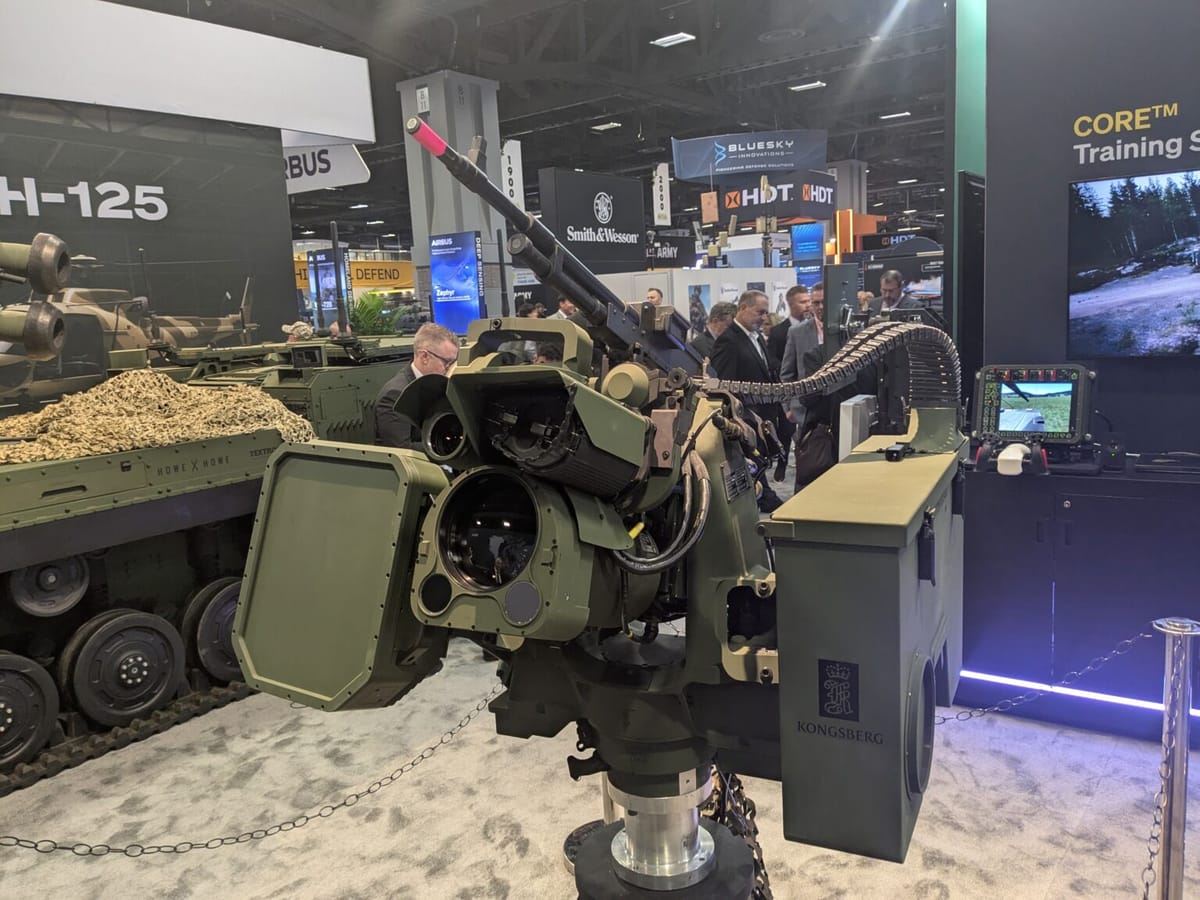
Kongsberg Defence & Aerospace and the US Army are upgrading the Common Remotely Operated Weapon Station (CROWS) by adding counter-UAS capabilities. This collaboration aims to enhance the Army's ability to detect and neutralize drone threats, improving operational effectiveness.

Key facts
- Kongsberg is integrating C-UAS capabilities into the US Army's CROWS.
- The move addresses the growing threat of drones in modern warfare.
- This collaboration highlights the importance of technological innovation in defense.
2 minute read
The US Army move to add counter UAS to CROWS signals a shift from standalone counter drone kits to embedding protection at vehicle level. For NATO, it pushes elements of short range air defence down to every platform already fitted with a remote weapon station. Ukraine has shown how cheap quadcopters and FPV munitions constrain manoeuvre and sap force survivability. A CROWS based approach offers 360 degree coverage, fast cueing from onboard sensors, and a common training and sustainment baseline across diverse fleets.
Industrial and policy implications are significant. A European supplier deepening its role on a flagship US program strengthens transatlantic standardisation and could set de facto interfaces for sensors, effectors, and battle management. European armies operating Kongsberg Protector variants can follow with lower integration risk and shorter schedules. Governance will matter. Export controls, cyber accreditation, spectrum policy, and airspace safety will shape which jamming modes and kinetic options are fielded in Europe. Interoperability with NATO air surveillance and ground based air defence, and avoidance of electromagnetic fratricide, will be as decisive as the hardware.
Procurement will favour modular kits that fuse radar, EO/IR, and passive detection, and that switch between non kinetic defeat and precise, low collateral kinetic effects, including programmable ammunition. Value will accrue in software, open architectures, and integration with battle management and targeting tools, not single exquisite sensors. For European forces seeking near term mass, upgrading existing RWS fleets offers a pragmatic bridge while larger SHORAD programs mature. Europe is moving toward ubiquitous, vehicle borne counter UAS as drone warfare scales in range and density.