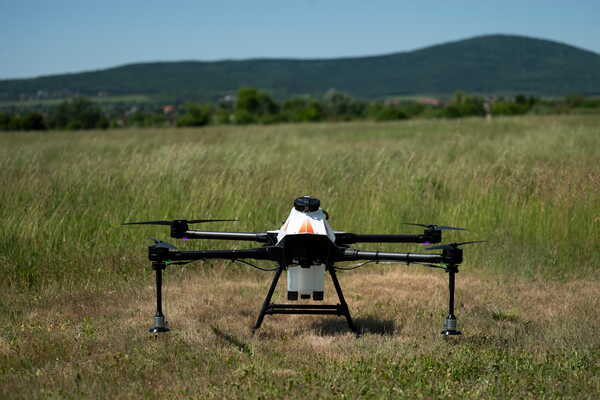
Latvian intel: drones drive up to 80% of Ukraine war casualties
Latvia’s SAB assesses drones cause 70–80% of Ukraine war casualties, accelerating tactics while constraining maneuver and raising the premium on sustained Western support.


Key facts
- Latvia’s SAB says drones cause 70–80% of killed or wounded on both sides in Ukraine.
- SAB judges drones increase tactical dynamism but reduce chances of strategic breakthrough, elevating Western support as decisive.
- Report highlights a reported Russian plan for a Belarus drone plant with capacity up to 100,000 drones/year and notes Russian recruitment for unmanned systems skills.
3 minute read
Latvia’s Constitution Protection Bureau (SAB) assesses that drones are responsible for 70–80 percent of personnel killed or wounded on both sides in Ukraine, a striking quantification that frames unmanned systems not as an adjunct to artillery but as the principal delivery mechanism for tactical attrition. In SAB’s reading, the saturation of aerial reconnaissance and short-range strike drones makes local actions more fluid—units can find, fix, and engage faster—yet it also suppresses operational maneuver by exposing concentrations and movement. The net effect is a battlefield that is highly dynamic at small unit level but structurally resistant to large-scale breakthroughs, with both sides forced into dispersion, concealment, and rapid adaptation.
This logic leads SAB to a strategic conclusion with direct European policy relevance: if drone-enabled transparency and strike density deny decisive maneuver, then the balance hinges more heavily on external sustainment—munitions, sensors, funding, training pipelines, and political cohesion—than on a single operational coup. The report also draws attention to Russia’s reported plan to build a drone production plant in Belarus with a stated capacity of up to 100,000 drones per year, a move that would deepen Moscow’s industrial resilience, complicate sanctions enforcement, and potentially create a geographically proximate supply node facing NATO’s eastern flank.
Supplementary reporting cited alongside SAB’s findings indicates Russia is institutionalising unmanned systems by recruiting students with computer and technical skills for its forces, signalling an intent to expand not only hardware volumes but also the software, electronic warfare, and data-processing competencies that determine effectiveness in contested electromagnetic environments. For European defence planners, the implication is twofold: force design must assume persistent, cheap air threats at every echelon, and counter-UAS cannot be treated as a niche capability. SAB also references disruptive drone incursions near European critical infrastructure, concluding that regardless of attribution they generated advantage for Russia—an assessment that reinforces the need for harmonised airspace surveillance, rapid attribution mechanisms, and proportionate defeat options across the EU and NATO.
Source: Politico.eu