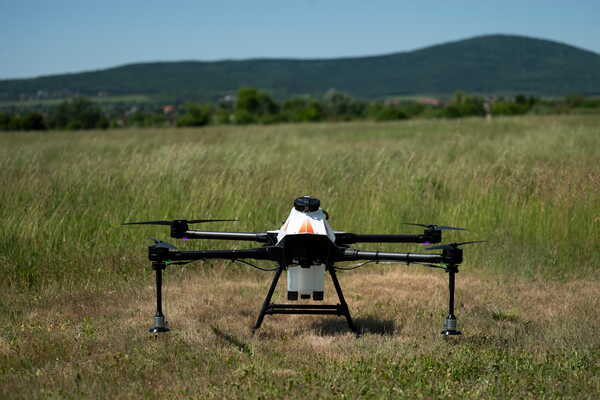
‘No warehouses anymore’: drones delivering supplies to Ukraine’s frontlines
Ukrainian forces are using autonomous and remotely piloted cargo drones to deliver ammunition, medical supplies and food directly to front-line units, reducing dependence on rear warehouses and vulnerable convoys.


Key facts
- Ukrainian units use commercial and purpose-built drones to deliver ammunition, medical kits and food to front-line positions.
- NATO’s Marco Criscuolo said success rests on human capital and processes as much as on drone technology.
- Scaling drone logistics faces limits from payload, contested airspace, maintenance needs and regulatory gaps.
2 minute read
Ukrainian forces are increasingly relying on unmanned aerial vehicles to move small but critical loads directly to front-line positions, cutting out parts of the traditional logistics chain and reducing exposure of convoys to strike. The practice — described by some field commanders as rendering “warehouses” less central to resupply — uses a mix of commercially adapted quadcopters and purpose-built cargo drones to ferry ammunition, batteries, medical supplies and food to dispersed units. NATO’s acting head of strategy and policy, Marco Criscuolo, told a conference that the technology alone is not the answer: human capital, processes and integration into command-and-control are equally decisive.
The tactical benefits are clear. Drone deliveries shorten resupply timelines, reduce the number of personnel and vehicles moving through dangerous areas, and allow smaller units to sustain higher operational tempos. They also complicate an adversary’s targeting calculus: strikes on rear depots degrade in effect when stocks are distributed and reconstituted by aerial delivery.
But adoption brings trade-offs. Payload and range limits constrain quantities delivered, while contested airspace and electronic warfare increase loss rates. Drone logistics require new maintenance chains, spare parts, trained operators and robust communications to avoid fratricide and interference with manned aviation. Legal and regulatory issues persist for civil airspace and allied training. For European policymakers and defence planners, the Ukrainian experience is a case study: invest in people, resilient comms and doctrine alongside procurement if unmanned resupply is to become a reliable tool in high-intensity warfare.
Source: Breaking Defense