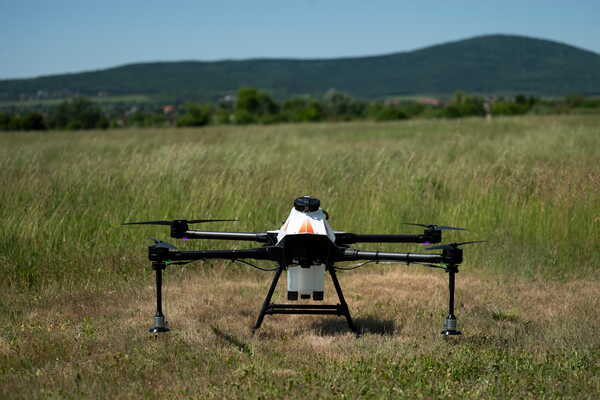
Nokia boosts 5G drone platform with Amprius SiCore batteries
Nokia is integrating Amprius SiCore silicon‑anode batteries into its 5G drone platform to extend endurance and payload for commercial and government missions.


Key facts
- Nokia integrated Amprius SiCore silicon‑anode batteries into its 5G drone platform.
- SiCore cells offer higher energy density than standard lithium‑ion, enabling longer endurance or greater payload.
- Upgrade targets BVLOS commercial and government use cases but raises certification and supply‑chain questions for Europe.
2 minute read
Nokia announced an upgrade to its 5G drone platform by adopting Amprius SiCore silicon‑anode batteries. The move pairs Nokia’s cellular and edge-compute capabilities with a higher-energy-density battery chemistry developed by Amprius, aiming to extend flight times and increase useful payload for commercial and government drone missions. Silicon‑anode cells are a known pathway to higher energy density than conventional graphite‑based lithium‑ion cells; manufacturers say the tech can either enable longer endurance or allow carrying heavier sensors and cargo for the same airframe.
For European operators, the upgrade is significant: improved endurance reduces the number of takeoffs and landings per mission, lowering operational complexity and potentially expanding BVLOS inspection, mapping, logistics and emergency response roles. Integration with a 5G stack preserves low-latency links for command-and-control, live video and edge processing, which are essential for safety-critical tasks and for leveraging network slicing in regulated airspace.
However, adoption brings technical and regulatory hurdles. High‑energy silicon‑anode batteries require careful thermal management, revised charging cycles and new maintenance practices. Certification authorities in Europe will need test data on safety, degradation and transportability. Supply-chain considerations also matter: reliance on a specialized cell supplier creates procurement and resilience questions, particularly for defence customers.
Overall, Nokia’s move reflects a broader industry trend: pairing advanced battery chemistries with robust connectivity to push drone capabilities beyond short‑duration flights. If manufacturers and regulators can align on safety and certification, the combination could unlock new commercial and government use cases across Europe.
Source: Dronelife