Parrot Secures Contract for Tactical Micro UAS with European Defence Force
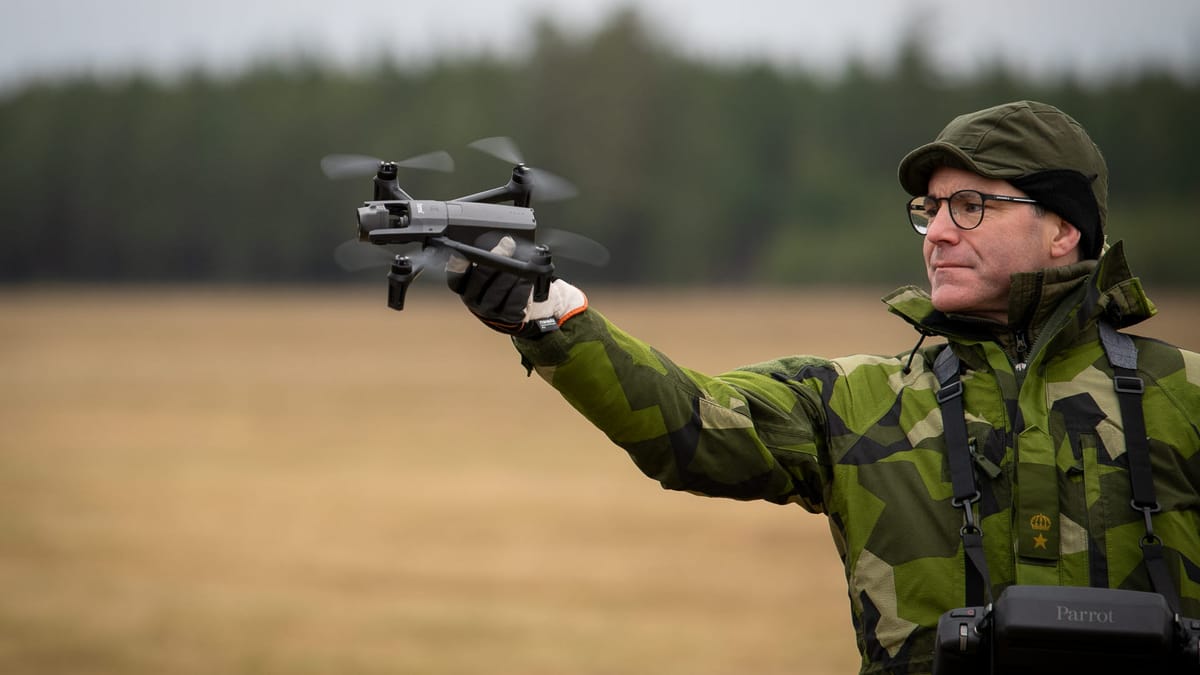
Parrot has been awarded a multi-year contract to supply its ANAFI UKR micro-UAS to a European Defence Force, enhancing tactical reconnaissance capabilities. This decision follows a competitive procurement process aimed at modernizing frontline operational tools.

Key facts
- Parrot's ANAFI UKR micro-UAS will enhance tactical reconnaissance capabilities.
- The contract follows a competitive three-year procurement process.
- This initiative aims to modernize frontline operational tools for European forces.
2 minute read
Parrot’s recent multi-year contract to supply ANAFI UKR systems to a European Defence Force is more than just a procurement win for the French manufacturer; it is a deliberate signal that European militaries are moving to secure, sovereign micro-UAS at scale. After the war in Ukraine exposed a dangerous over-reliance on commercial drones with fragile supply chains and questionable data security, defense buyers are pivoting. They now demand systems that can be sustained in theater, hardened against jamming, and fully integrated into national command networks.
This shift is driven by a stark realization at the highest levels of governance. As European Commission President Ursula von der Leyen emphasized recently, the continent’s security architecture must be absolute, stating that Europe has an obligation "to protect every citizen and square centimetre of our territory." This political mandate is trickling down into technical requirements. A European vendor with established manufacturing and export pathways not only reduces ITAR friction but also supports the EU’s defense technological and industrial base. It diversifies NATO’s small UAS portfolio beyond U.S. and Chinese ecosystems, offering a strategic hedge as geopolitical controls tighten.
For NATO, the adoption of a common micro-UAS class like the ANAFI UKR offers a path to standardize tactics, training, and sustainment across battlegroups. This improves distributed reconnaissance, target acquisition, and battle damage assessment—critical capabilities in a conflict where the front line is everywhere. However, the value will come from interoperability rather than just the airframes themselves. Secure data paths, compliant metadata, and interfaces to digital fires and intelligence systems will determine whether these drones can effectively shorten sensor-to-shooter timelines.
The operational reality, however, remains unforgiving. As EU Defence Commissioner Andrius Kubilius noted regarding the evolving threat landscape, traditional air defenses are often ill-suited for this new era: "Maybe we have good capability to detect air fighters and missiles, but drones have specificity – they are flying very low, they are small." To survive in such contested electromagnetic environments, procurement must pair air vehicles with electronic protection, disciplined emissions control, and rapid firmware iteration informed by frontline feedback.
Parrot’s Senior Vice President, Chris Roberts, framed the utility of the new platform precisely, noting that "ANAFI UKR gives tactical teams a decisive information advantage at the edge." This advantage is what ministries prioritized during the three-year competition, valuing lifecycle cost, local support, and upgrade roadmaps over simple one-off buys. If the program scales, it could lead to joint procurement and framework contracts that lower unit costs and accelerate refresh cycles. Ultimately, Europe is moving toward agile, sovereign drone layers that will redefine tactical reconnaissance, ensuring that reserve units can be equipped and trained as quickly as active forces.