Pentagon fast-tracks $50bn drone spend with open architectures and mass buys
Pentagon leaders want to rapidly convert drone experimentation into mass procurement, using expanded buying pathways, rapid trials, and open data architectures that sidestep vendor lock-in.

Key facts
- Pentagon officials seek to expand commander-accessible drone purchasing beyond a historically narrow Blue UAS cleared list to enable faster scaling of proven systems.
- The $50bn request is framed as a mix of buying existing platforms “en masse” and bringing in new companies to develop and expand production capacity.
- US commands emphasise open architectures and forward-edge data networks; proprietary vendor stacks and restrictive interfaces are described as unacceptable.
3 minute read
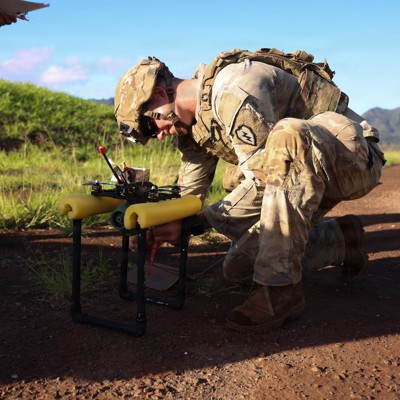
The Pentagon’s requested $50bn for drone development and production in FY2026 is being framed less as a single monolithic programme than as an attempt to industrialise what has been a fragmented, unit-led experimentation ecosystem. Senior officials argue that distributed purchasing had value for learning but was constrained by a narrow set of pre-cleared options, limiting vendors’ ability to break in and preventing rapid scaling once a capability proved itself. The near-term remedy is administrative and commercial: expand the set of drones that commanders can buy easily and then convert proven systems into larger, department-level orders.
Execution will combine bulk procurement of existing platforms with deliberate investment to mature and scale new entrants. The article points to the autonomous surface vessel maker Saronic as an exemplar of a company moving from experimentation evidence to Navy procurement at quantity, indicating that the spend is intended to bridge the “valley of death” between prototypes and production rather than fund only exquisite, long-cycle systems.
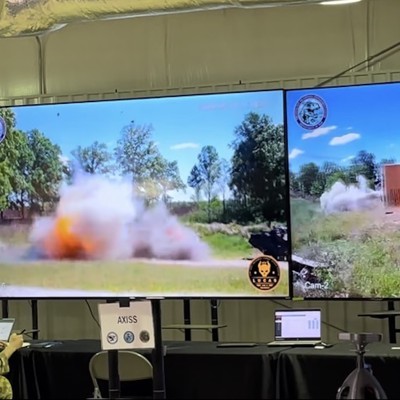
Operationally, the piece underscores rapid iteration in attritable strike systems through the LUCAS/FLM-136 demonstration at Camp Atterbury, presented as evidence of fast-evolving low-level capability and urgency to field in volume. The Pentagon is also explicitly mining Ukraine-linked innovation: “Drone Dominance” trials identified Ukrainian Defense Drones and a SkyFall–UK partnership among top performers, reflecting a willingness to source from wartime-adapted supply chains and software-centric SMEs.
Perhaps most strategically, SOUTHCOM’s Autonomous Warfare Command messaging prioritises the data environment and open architectures. The command’s leadership argues that the decisive layer is the forward-edge data network that allows forces to ‘plug in’ whatever robot arrives, and rejects vendor lock-in via proprietary stacks or restrictive interfaces. For Europe, this is a clear signal: US demand will increasingly reward standards-based integration, modular mission software, and export-compliant data sharing. European procurement officials should expect growing pressure to align national drone, counter-UAS, and C2 investments with open, interoperable data layers, while European industry faces a competitive benchmark on scaling, cost-per-effect, and the speed at which trial winners can transition into contracts.
Source: Defense One