Polish Teens Train in Drone Operations Amid Rising Russian Threat
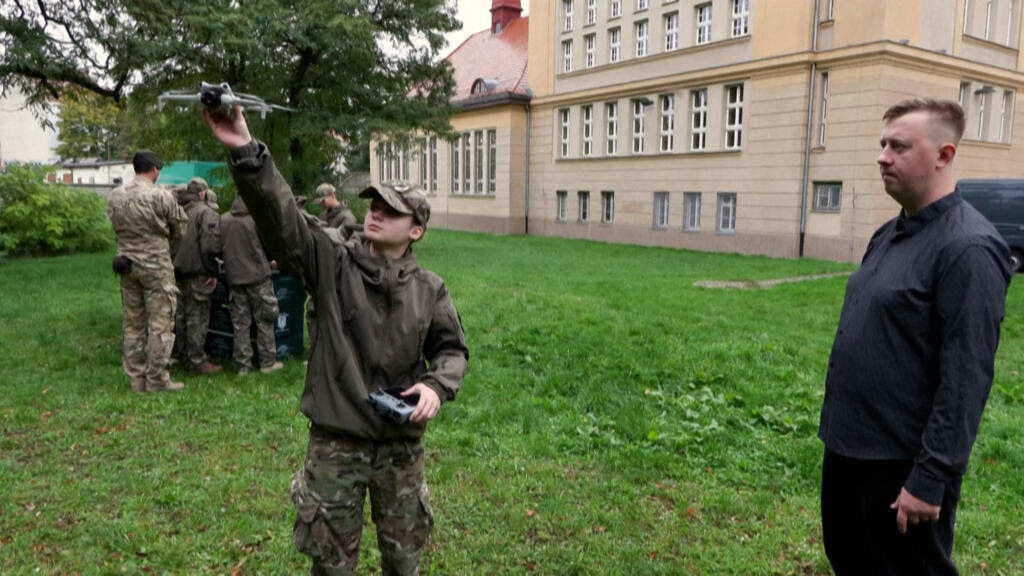
In response to increasing security concerns regarding Russian aggression, Polish military schools have initiated the country's first drone training program for teenagers.

Key facts
- Polish military schools are offering drone training to teenagers.
- The initiative is a response to the growing threat of Russian incursions.
- The program is overseen by the Ministry of Defence.
- Students will learn both operational skills and military strategies.
2 minute read
Poland is institutionalising drone skills at the pre-university level, signalling a shift from ad hoc uptake to a structured pipeline of operators for a conflict environment shaped by cheap, expendable UAVs. Lessons from Ukraine are clear. Mass, persistence and rapid adaptation matter. By placing the Ministry of Defence in charge, Warsaw is aligning curricula with doctrine, airspace rules and electronic warfare realities, not hobbyist practice. The aim is less about flying and more about mission planning, survivability and integration with fires and intelligence.
Strategically, this builds depth on NATO’s northeastern flank. A steady flow of trained operators can reinforce the Territorial Defence Force, reserves and civil protection, creating a distributed capability that complicates an adversary’s planning. Standardised training also supports interoperability, from common communications procedures to shared counter-UAS investments. The approach anticipates congested and contested airspace, emphasising deconfliction with manned aviation, responsible use and resilience against jamming and spoofing.
There is an industrial logic as well. Early training grows a domestic talent base for Poland’s expanding drone ecosystem, including maintenance, software, sensors and command-and-control. That complements EU efforts to scale defence production and could anchor public private partnerships with universities and local firms. A larger pool of competent users will stress test supply chains and inform procurement choices, improving value for money and sustainment planning across the alliance.
Expect spillover. Baltic and Nordic states, as well as Germany and the Czech Republic, are likely to formalise similar tracks, pairing operator pipelines with counter-UAS investments in sensors, jammers and layered air defence. Risks remain, including militarisation of schooling, civil aviation safety and dual use export controls, which will require strict governance and transparency. Europe is moving toward a defence model that blends mass, attritable airpower and digitally savvy operators.
These might peak your interest...
 Mr. T (Curator)
 Mr. T (Curator)
 Mr. T (Curator)