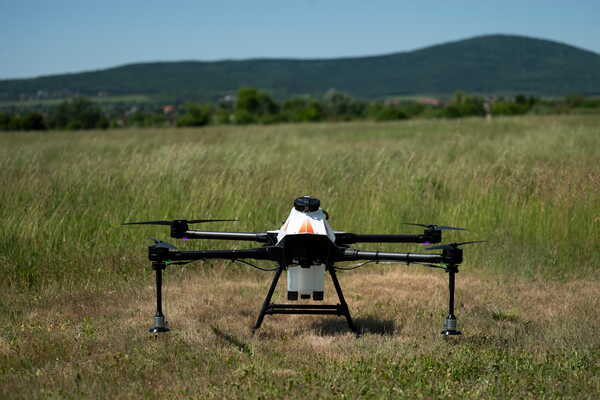
Quantum Systems and ADV Defense sign MoU to boost German-Lithuanian defence ties
Quantum-Systems and Lithuania’s ADV Defense signed a memorandum of understanding to create an industrial partnership for unmanned systems operations, sustainment and training in the Baltic region.


Key facts
- Quantum-Systems and ADV Defense signed a memorandum of understanding to form an industrial partnership for unmanned systems in the Baltic region.
- The MoU focuses on operations, training, maintenance, logistics and potential local assembly to bolster regional resilience and NATO interoperability.
- Partnership aims to shorten supply chains, grow local sustainment capacity and deepen German–Lithuanian defence industrial ties.
2 minute read
Quantum-Systems, the German unmanned aircraft systems developer, and Lithuanian defence firm ADV Defense have formalised cooperation with a memorandum of understanding designed to anchor unmanned systems operations and industrial support in the Baltic region. The agreement, announced in early December 2025, frames a strategic partnership that pairs Quantum-Systems’ platform and sensor expertise with ADV Defense’s local integration, logistics and operational experience.
According to company statements, the MoU covers joint activities including operational trials, training programmes, maintenance and logistics support, and exploration of local assembly or sustainment hubs. The intended outcome is to shorten supply chains, boost readiness, and improve interoperability with NATO partners operating in the Baltic theatre. For Lithuania and its neighbours, which face persistent security pressures on NATO’s eastern flank, the arrangement promises faster in-region fielding and domestic technical capacity rather than sole reliance on distant suppliers.
Beyond immediate operational benefits, the partnership carries industrial and political significance. It supports EU and NATO resilience goals by fostering localized capability and skills, creates commercial pathways for market access across the Baltics, and enhances bilateral defence ties between Germany and Lithuania. Analysts note that such agreements can serve as templates for wider European cooperation on unmanned systems, balancing technology transfer, security-of-supply concerns and export controls. Implementation will determine whether the MoU results in tangible infrastructure—training centres, maintenance facilities and joint programmes—or remains a framework for further negotiations.
Source: sUAS News