Reaper fires APKWS in air-to-air drone defence demo
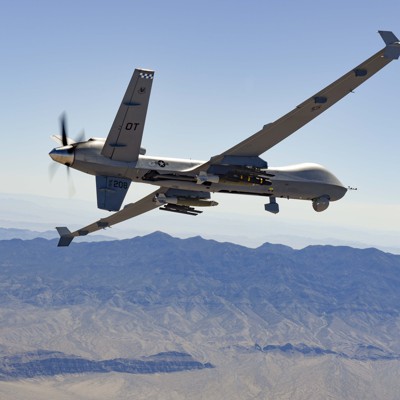
USAF has demonstrated an MQ-9A Reaper using low-cost laser-guided APKWS to down aerial targets, aiming to cut the cost of countering one-way attack drones—an approach with clear implications for Europe’s layered air defence and magazine depth.

Key facts
- USAF demonstrated an MQ-9A Reaper engaging aerial targets using the laser-guided APKWS at the Nevada Test and Training Range, per General Atomics.
- APKWS is assessed at roughly USD 25,000–40,000 per round, positioned as a cheaper alternative to high-end air-to-air missiles for countering one-way attack drones.
- US reporting links the effort to operational pressure from Iranian Shahed attacks and notes significant US aircraft losses in the Iran conflict, including MQ-9s (open-source analysis).
3 minute read
General Atomics has disclosed that the US Air Force used an MQ-9A Reaper to down aerial targets with the laser-guided Advanced Precision Kill Weapon System (APKWS) during a demonstration at the Nevada Test and Training Range. The company frames the integration primarily as a counter to one-way attack drones, arguing that APKWS increases the number of weapons the MQ-9A can carry while enabling lower-cost engagements than traditional air-to-air missiles. The Air Force did not provide immediate additional detail, leaving key parameters—target type, range, engagement geometry, rules of control for laser designation, and shot success rates—unconfirmed in the open reporting.
The operational logic is cost-imposition. The report cites Iranian Shahed one-way attack drones priced around USD 30,000 and notes that US forces have used fighter aircraft firing “million-dollar missiles” to counter similar threats. APKWS, assessed by analysts at roughly USD 25,000–40,000 per round, offers a closer match to low-end UAV economics and, critically, a larger magazine depth compared with high-end missiles. For a USD 30m-class MQ-9 typically tasked for ISR but capable of carrying a diverse strike loadout, a cheap air-to-air option could extend persistent airborne defensive cover over bases, maritime chokepoints, or high-value assets without consuming scarce fighter hours.
For Europe, the significance is less about the MQ-9 platform itself than the pattern: repurposing mature, mass-produced guided rockets into an airborne counter-UAS interceptor to relieve pressure on premium air-defence inventories. European forces facing proliferating one-way attack drones and constrained missile stocks may see an argument for accelerated integration of low-cost interceptors onto existing MALE UAVs and other aircraft, particularly for expeditionary base defence and layered protection where ground-based systems are saturated. The flip side is strategic warning: open-source analysis cited in the report indicates substantial US aircraft losses in the Iran conflict, including multiple MQ-9s, underscoring that any airborne counter-UAS concept must be paired with survivability measures, dispersal, and resilient command-and-control.
The announcement also lands amid the Air Force’s broader push for affordable mass in uncrewed systems, with General Atomics simultaneously competing for Collaborative Combat Aircraft (CCA) programmes. Budget documents referenced in the report indicate nearly USD 1bn sought for initial CCA procurement in FY2027 and an Increment 1 production decision expected within months, signalling that low-cost weapons integration and scalable uncrewed force structure are converging in US planning—an industrial and procurement trajectory European primes and ministries will track closely.
Source: Defense One